Solar Submersible vs Surface Pumps: How to Choose the Right Pump Type for Your Water Source
Introduction
One of the first decisions in any solar pumping project is submersible versus surface. The difference is simple – where the pump sits – but it drives cost, reliability and the kind of source you can use. KINBO supplies both, and this article compares how they work, when each wins, their efficiency and cost, and gives a decision checklist so you choose the right type for your water source the first time.
Table of Contents
How the Two Types Differ
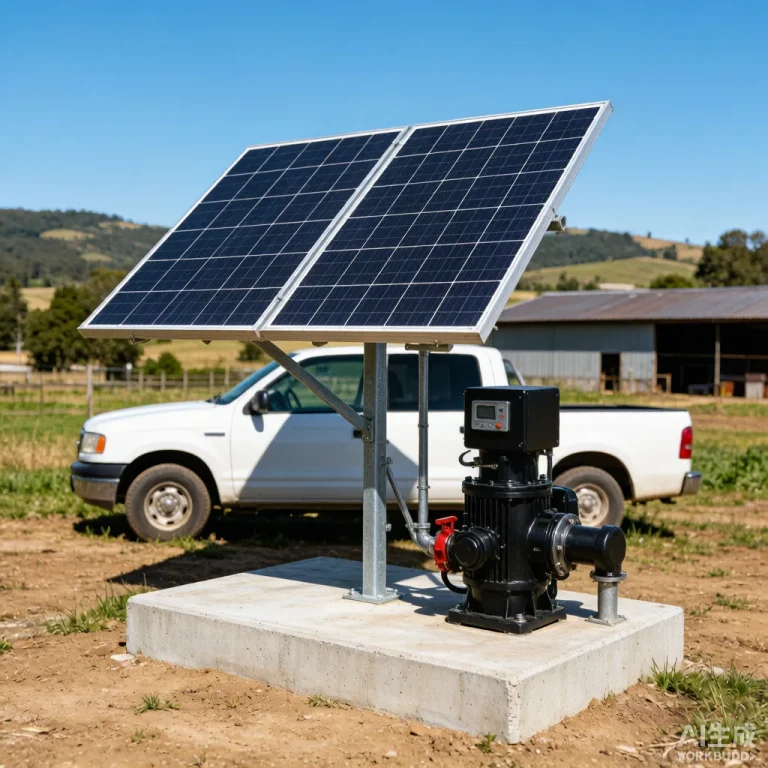
A submersible pump lives inside the water, pushed down a borehole or well, and pushes water up. A surface pump sits above ground and either draws water by suction (shallow) or pushes it from a nearby pond or tank. The placement decides the head math and the maintenance approach.
Submersibles are protected from sun and weather but harder to access; surface pumps are easy to service but exposed. Both run from the same solar controller, so the choice is about source and lift, not about the power system.
A broader guide to choosing a solar water pump covers the other factors beyond pump type.
When a Submersible Pump Wins
Choose submersible when the water is deep. Beyond roughly 8-10 meters of lift, suction pumps lose effectiveness, and a borehole simply requires a downhole unit. Submersibles also suit contaminated or silty surfaces where an above-ground intake would clog.
- Deep wells and boreholes: the only practical option.
- Protected from weather: longer electronics and motor life.
- Quiet and hidden: less visual and theft exposure.
The trade-off is retrieval: any service means pulling the pump, so quality and correct sizing matter more than with surface units.
When a Surface Pump Wins
Surface pumps shine for shallow, accessible sources: ponds, rivers, storage tanks and shallow wells within suction reach. They are easy to inspect, clean and repair without special tools.
For moving water from a low source up to an elevated tank, a surface pump with a strainer is ideal and cheap to maintain. They also suit seasonal setups that are packed away between uses.
Because they sit in the open, place them on a stable, shaded, ventilated base and protect the inlet from debris and freezing where relevant.
Side-by-Side Comparison
The table summarizes the trade-offs.
| Factor | Submersible | Surface |
|---|---|---|
| Best source | Deep well / borehole | Pond / shallow / tank |
| Service access | Pull unit | Easy |
| Cost (install) | Higher | Lower |
Efficiency is comparable at the right duty; the deciding factor is almost always source depth and accessibility.
Decision Checklist
Ask four questions: How deep is the water? Is the source clean and accessible? How often will you service? What is your budget for install versus lifetime cost?
Deep or dirty source and infrequent access favors submersible; shallow, clean and frequently serviced favors surface. Standardize one type across a site to simplify spares where possible.
When the source changes by season, a flexible AC DC solar pump can pair with either approach for mixed conditions.
Frequently Asked Questions
What is the main difference between submersible and surface solar pumps?
A submersible pump is placed inside the water source and pushes water up, while a surface pump sits above ground and draws or pushes from a nearby pond, tank or shallow well.
Which is better for a deep borehole?
A submersible pump is the practical choice for deep boreholes, because suction surface pumps lose effectiveness beyond roughly 8-10 meters of lift.
Which is easier to maintain?
Surface pumps are easier: they sit in the open and can be cleaned or repaired without special tools, whereas submersible service requires pulling the unit.
How do I decide between the two?
Base the choice on source depth, water cleanliness, service frequency and install versus lifetime cost; deep or dirty sources favor submersible, shallow clean sources favor surface.
For B2B buyers choosing submersible vs surface solar pumps, contact KINBO for competitive FOB pricing and technical specifications.
Related Articles
- AC DC Solar Pump: Types, Built-in Controllers and How to Select One for Off-Grid Water Supply
- Difference Between DC and AC Solar Pumps: Which One Should You Choose for Your Water Project?
- Explore KINBO Solar Submersible Pumps