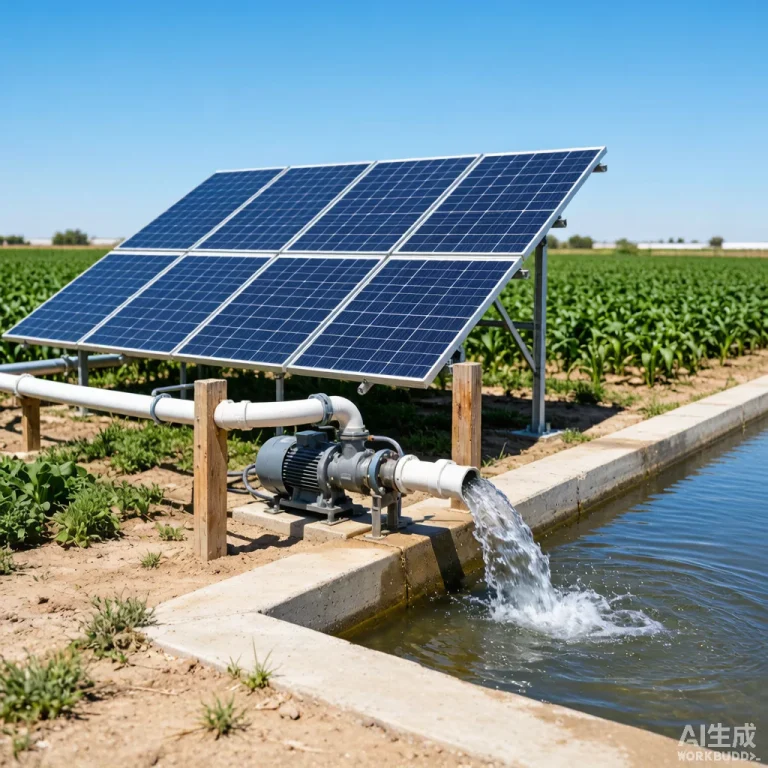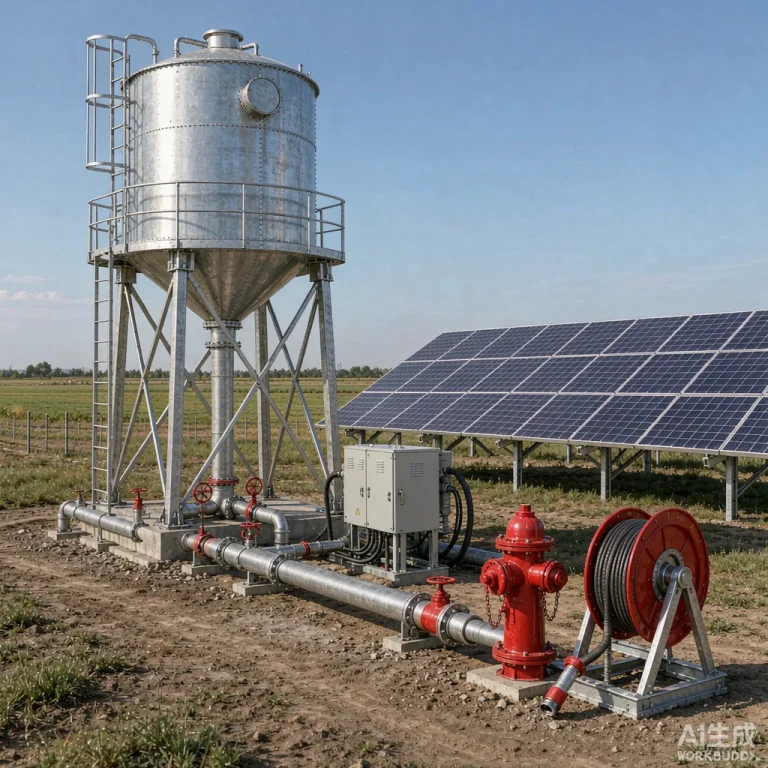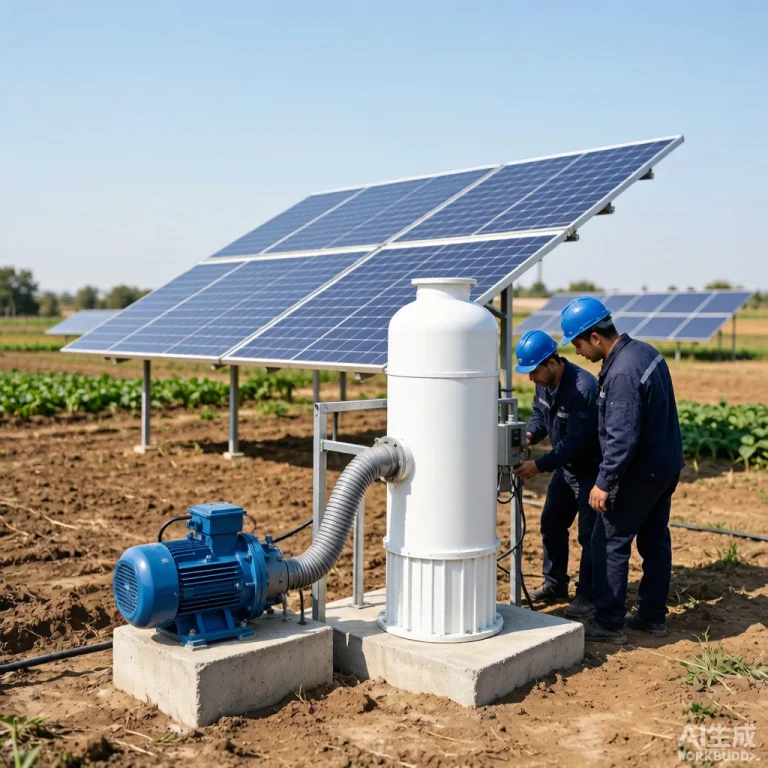
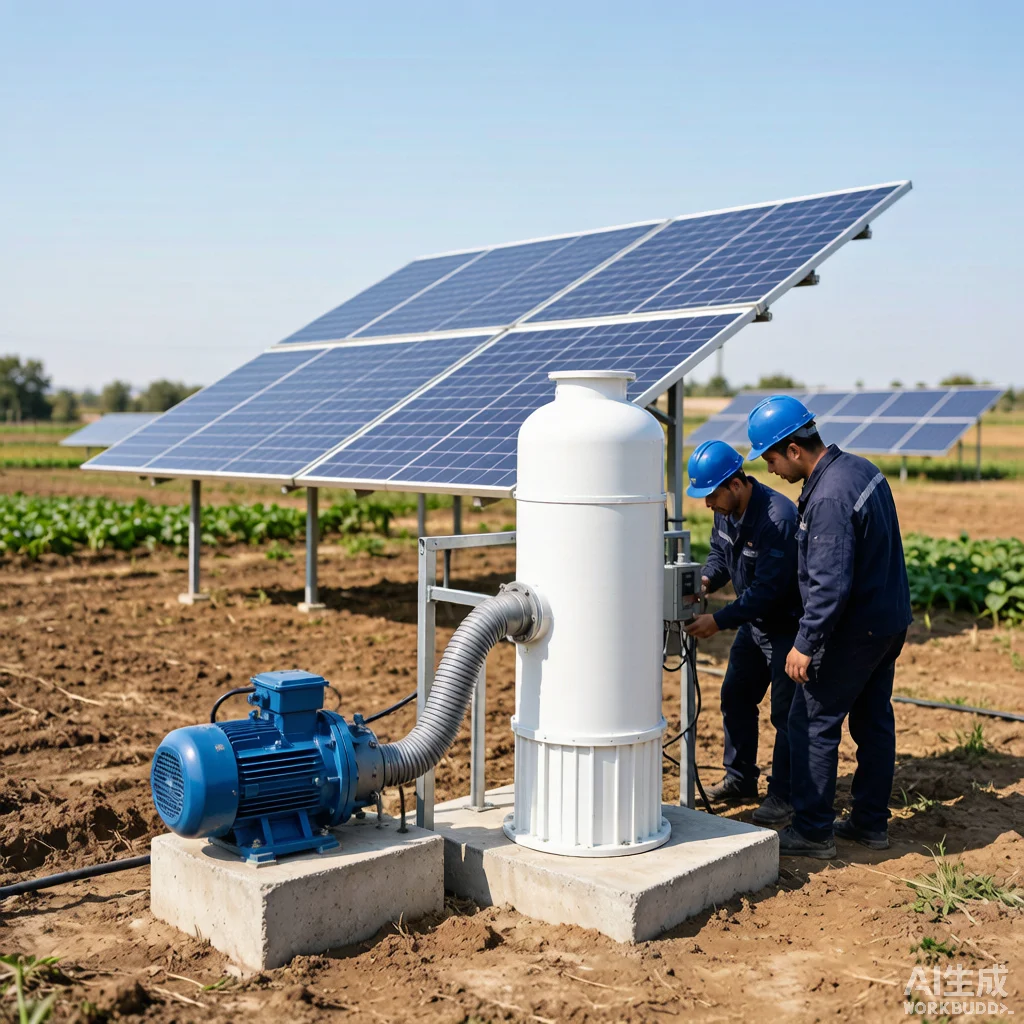
Solar Pumps for Construction Site Dewatering and Groundwater Control
Introduction
Construction site dewatering is one of the most energy-intensive and logistically demanding temporary works operations in civil engineering. Excavations below the groundwater table require continuous pumping to maintain dry, stable working conditions for foundation construction, pipeline laying, and underground structure installation. Traditional diesel-powered pumps have dominated this application for decades, but their fuel logistics, carbon emissions, and noise profiles are increasingly at odds with modern construction sustainability requirements and site noise regulations. KINBO has developed solar-powered pumping solutions specifically engineered for the high-flow, low-head, continuous-duty demands of construction dewatering and groundwater control. This article provides a technically rigorous analysis of solar pump application in construction dewatering, including regulatory frameworks, cost comparison against diesel alternatives, pump selection criteria, and practical deployment strategies for temporary installations. Real flow rate data and economic calculations are provided to support informed equipment selection.
Table of Contents
Construction Dewatering Requirements and Regulations
Construction dewatering is governed by a dual framework of geotechnical requirements and environmental regulations. From a geotechnical perspective, the objective is to lower the groundwater table to at least 0.5–1.0 m below the deepest excavation level to ensure slope stability, prevent base heave, and enable dry working conditions. The required pumping rate Q (m³/h) is estimated from the Darcy equation for steady-state radial flow to a well: Q = πk(H² − h²) / ln(R/r₀), where k is hydraulic conductivity (m/s), H is the initial saturated thickness (m), h is the target water level (m), R is the radius of influence, and r₀ is the effective well radius. For a typical sand formation with k = 1×10⁻⁴ m/s (8.6 m/day), H = 8 m, target drawdown of 5 m giving h = 3 m, and R/r₀ ≈ 1,000, the required flow is approximately Q = π × 1×10⁻⁴ × (64 − 9) / ln(1000) = π × 1×10⁻⁴ × 55 / 6.91 ≈ 0.0025 m³/s = 9.0 m³/h — per well. Multiple wellpoints are normally required, with a typical wellpoint system for a modest excavation (20 × 30 m footprint, 4 m depth) demanding total flow rates of 20–60 m³/h depending on soil conditions.
Environmental regulations add critical constraints. Discharge of groundwater is regulated under water resource and environmental protection laws in most jurisdictions. Key compliance requirements include: (1) discharge permits specifying maximum abstraction rates and discharge points; (2) water quality testing for suspended solids (typically limited to 30–50 mg/L TSS for direct discharge to surface water), hydrocarbons, and pH before discharge; (3) settlement monitoring of adjacent structures, as drawdown extends beyond the site boundary — a 1 m drawdown at 50 m from the excavation can produce 5–15 mm of consolidation settlement in compressible soils; (4) silt management including settlement tanks or silt curtains, as excavation sump pumping can generate TSS concentrations exceeding 500 mg/L. Solar pumps offer a distinct regulatory advantage in that their zero on-site emissions simplify environmental compliance documentation and can contribute to green building certification credits (LEED, BREEAM, Green Star) where applicable.
Solar vs Diesel Pumps for Construction Sites
The economic comparison between solar and diesel-powered dewatering pumps has shifted substantially in favor of solar, particularly for projects exceeding 3 months duration. A systematic cost comparison for a 40 m³/h dewatering duty reveals the breakeven point. Diesel pump systems incur capital costs of approximately USD 2,000–4,000 for a 6-inch self-priming centrifugal pump, plus fuel consumption of 2.5–3.5 L/h at 75% load, equivalent to USD 80–110 per 10-hour working day at USD 1.00/L diesel price. Additional diesel costs include fuel delivery logistics, on-site fuel storage compliance (bunded tanks, spill containment), daily refueling labor (0.5–1.0 man-hour/day), and filter/oil change maintenance every 250 operating hours at USD 100–150 per service. Over a 6-month project with 180 operating days, total diesel costs reach approximately USD 18,000–30,000 including fuel, maintenance, and logistics — excluding the social cost of 28 tonnes of CO₂ emissions (at 2.68 kg CO₂/L diesel × 3.0 L/h × 10 h/day × 180 days).
A solar pump system with equivalent 40 m³/h capacity requires an upfront capital investment of USD 12,000–18,000 (pump, controller, and PV array of 10–15 kWp), but incurs near-zero operating cost. The PV array sizing calculation: daily hydraulic energy = ρgQHtotal × operating hours, where ρ = 1,000 kg/m³, g = 9.81 m/s², Q = 40 m³/h = 0.0111 m³/s, Htotal = 10 m (typical dewatering total dynamic head including 5 m static lift + 3 m friction + 2 m discharge head). Required hydraulic power = 0.0111 × 1,000 × 9.81 × 10 = 1,089 W. With pump efficiency η = 0.55, required electrical input = 1,980 W. For 10 hours operation at 5.5 peak sun hours (PSH) equivalent, PV array size = (1,980 × 10) / 5.5 ≈ 3,600 Wp — but adding a 1.5× oversizing factor for cloudy days and morning/evening operation yields 5.4 kWp. For 24-hour continuous dewatering (common in high-permeability soils), battery storage or hybrid diesel backup is required, which adjusts the economic model. Over a 6-month project, the solar system achieves total cost parity with diesel after approximately 3–4 months; over 12 months, the solar system delivers 40–60% total cost savings. The crossover point shrinks as diesel prices rise and PV costs continue their historical decline.
Pump Selection for High-Flow, Low-Head Applications
Construction dewatering is predominantly a high-flow, low-head application, with total dynamic head (TDH) rarely exceeding 10–15 m. This dictates specific pump type selection. Surface-mounted centrifugal end-suction pumps with open or semi-open impellers are the standard for sump dewatering, offering tolerance to moderate sediment loads (up to 5% solids by weight) and achieving best efficiency points in the 8–20 m head range. For KINBO solar-powered systems, this translates to DC brushless or AC induction motor-driven centrifugal pumps in the 1.5–5.5 kW range, coupled to MPPT-based solar pump controllers with variable frequency drive (VFD) functionality.
The pump performance curve must match the system curve over the full range of operating conditions. System head comprises static head (distance from water surface in sump to discharge point) plus friction head from hoses or pipes — friction head follows the Darcy-Weisbach equation: hf = f·(L/D)·(v²/2g). For a typical dewatering setup using 100 mm (4-inch) lay-flat hose at 40 m³/h: flow velocity v = Q/A = (0.0111 m³/s) / (π × 0.05² m²) = 1.41 m/s. With Reynolds number Re = vD/ν = 1.41 × 0.1 / (1.0×10⁻⁶) ≈ 141,000 (turbulent flow) and relative roughness for PVC lay-flat ≈ 0.0015 mm/D = 0.000015, friction factor f ≈ 0.017 from the Colebrook equation, giving friction loss hf = 0.017 × (100/0.1) × (1.41²/19.62) = 0.017 × 1,000 × 0.101 ≈ 1.72 m per 100 m of hose. For a 50 m hose run, total friction = 0.86 m, plus static lift (typically 3–6 m from excavation floor to grade), plus velocity head (negligible at ~0.1 m), yields a TDH of approximately 4–9 m — confirming the low-head requirement.
Comparison of pump types for construction dewatering:
| Pump Type | Flow Range (m³/h) | Max Head (m) | Sediment Handling | Solar Compatibility |
|---|---|---|---|---|
| End-Suction Centrifugal (Open Impeller) | 10–80 | 10–30 | Up to 5% solids | Excellent — VFD-ready |
| Self-Priming Trash Pump | 20–150 | 15–28 | Up to 25% solids | Good — requires higher starting torque |
| Submersible Dewatering Pump | 5–50 | 5–20 | Up to 10% solids | Good — DC motor options available |
| Axial Flow Pump | 100–500+ | 2–8 | Low | Limited — high power demand |
Temporary Installation and Rapid Deployment Strategies
Construction sites demand rapid mobilization and demobilization of dewatering equipment as excavations progress through different phases. Solar pump systems designed for temporary construction use must prioritize portability, modularity, and ease of field service. KINBO’s approach to construction-site solar pumping integrates several design features for rapid deployment. The PV array is configured in pre-wired foldable or pallet-mounted modules of 1–2 kWp each, with plug-and-play MC4 connectors that enable array assembly in under 2 hours by a two-person crew. The pump skid is a single-lift unit (under 500 kg for systems up to 5.5 kW) incorporating the pump, controller, DC isolator, and SPDs on a galvanized steel base frame with forklift pockets and lifting eyes — no on-site assembly or field wiring of electrical components is required beyond DC input from the array and hose connections.
Site layout for solar dewatering requires balancing sun exposure against proximity to the excavation. The PV array should be sited on the south-facing side of the excavation (north-facing in the Southern Hemisphere) with no shadowing from site cabins, material stockpiles, or crane operations between 09:00 and 15:00 — the period producing 80% of daily solar yield. A minimum clearance of 5 m from the excavation edge is required for safety (exceeding the 45° line-of-influence zone from the toe of any battered slope). Where site space constraints preclude ground-mounted arrays, vertical PV panels on site hoarding or container-mounted arrays on site office roofs can supplement power, though at reduced yield (vertical panels produce approximately 65–70% of optimally tilted output at mid-latitudes).
Monitoring and remote operation are critical for construction dewatering, which must often run unattended overnight and on weekends to maintain drawdown. KINBO solar pump controllers support GSM/4G telemetry with cloud-based dashboards showing real-time flow rate, water level (via submersible pressure transducer or ultrasonic sensor), PV power output, and fault alarms. Auto-start/stop logic based on sump water level sensors prevents dry running while ensuring the excavation does not flood. The controller can also be integrated with site-wide SCADA or BMS via Modbus RTU/TCP, enabling central monitoring of multiple dewatering points across a large construction site. For sites without cellular coverage, LoRa radio telemetry provides a 2–5 km range alternative with lower power consumption and no recurring data costs.
For technical consultation on solar-powered dewatering solutions for your construction project, contact KINBO.
Frequently Asked Questions
Can solar pumps handle the high sediment loads at construction sites?
Yes, solar-powered centrifugal pumps with open or semi-open impellers can handle sediment concentrations up to 5% by weight (approximately 50,000 mg/L) without significant wear. For higher sediment loads common in silty or sandy excavations up to 25% solids, trash pumps with recessed impellers or vortex impellers are recommended. Regardless of pump type, a settlement sump lined with geotextile fabric should be constructed at the lowest point of the excavation to allow coarse particles to settle before water enters the pump intake. The pump intake strainer should be suspended 300–500 mm above the sump floor to avoid ingestion of settled sediment. Regular inspection of impeller wear after every 200 operating hours in abrasive conditions is recommended.
What flow rates are typical for construction dewatering?
Typical construction dewatering flow rates range from 10–150 m³/h depending on excavation size, depth below groundwater, and soil permeability. A small utility trench excavation (1–2 m wide, 3–4 m deep) in sandy soil may require 10–30 m³/h. A medium building foundation excavation (20 × 30 m, 4–6 m deep) in silty sand typically requires 30–80 m³/h total from 4–8 wellpoints. Large infrastructure excavations (basement car parks, tunnel shafts) can demand 100–500+ m³/h. The flow requirement is not constant — it peaks during initial drawdown (first 24–72 hours) and then stabilizes at a lower steady-state rate once the cone of depression is fully developed. Solar pump systems should be sized for the steady-state rate plus a 20–30% margin for rainfall events, with battery or diesel backup for initial drawdown if the solar array alone cannot sustain 24-hour pumping during that phase.
Is solar dewatering cost-effective compared to diesel for short-term projects?
For projects shorter than 3 months, diesel pumps generally maintain a total cost advantage due to the capital cost recovery period of solar equipment. However, for projects of 3–6 months, solar and diesel reach approximate cost parity, and beyond 6 months, solar provides significant savings. The breakeven accelerates when diesel prices exceed USD 1.20/L, when the site has no existing grid connection (eliminating transformer and connection costs for diesel), or when carbon pricing or green certification requirements are in effect. For short-term projects under 2 months, solar equipment rental models (where available) can bridge the gap — the monthly rental cost of a solar pump skid plus PV array is comparable to diesel fuel costs alone, making solar competitive even on short programs. Additionally, the residual value of the solar equipment after project completion (unlike consumed diesel fuel) should be factored into the total cost of ownership calculation.
Related Articles
- Solar Pump Dewatering for Open-Pit Mining Operations
- Hybrid Solar-Diesel Pumping Systems: Design and Optimization