Solar Pump Systems for Gold Mine Water Treatment and Clarification
Introduction
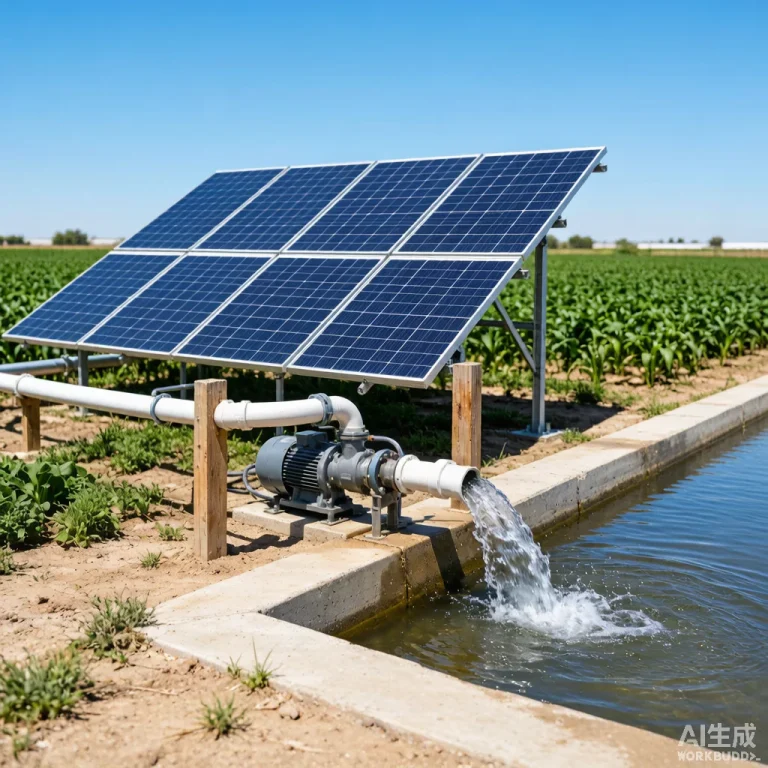
Gold-mine water is rarely clean. Run-off, process water and pit dewatering can be turbid, acidic and metal-laden, and must be settled, neutralised and clarified before it is reused or released. Moving that water through a treatment train—from raw intake to clarifier to reuse—is itself a pumping job, and at a remote African site it should not depend on diesel. Solar pumps can lift raw water, transfer sludge and top up process streams off-grid, wrapping the whole treatment step into the mine’s solar system. This article covers solar pump systems for gold-mine water treatment and clarification, written by specialists at KINBO.
Table of Contents
The Treatment Train
A typical gold-mine water-treatment sequence:
- Settling / coagulation—raw water held so solids drop, often with a flocculant added (our reagent-dosing guide).
- Clarification—clarifier or thickener separates clear overflow from underflow sludge.
- Neutralisation—lime or other reagent adjusts pH for discharge or reuse.
- Filtration / reuse—polished water returns to process or camp (our camp supply guide).
Where Pumps Sit in Treatment
- Raw-water lift—brings pit or surface water up to the clarifier; can be abrasive, so size for sediment handling.
- Sludge / underflow transfer—thickened sludge to the tailings or a drying bed; a positive-displacement or robust centrifugal pump handles the density.
- Clarified-water return—low-pressure transfer back to process or storage; often a small, efficient duty our effluent-reuse guide covers.
- Reagent feed—precise low-flow dosing driven by solar, as above.
Running Treatment on Solar
- Zoned arrays—treatment runs in daylight, so each pump can draw from a shared array sized to combined daytime demand.
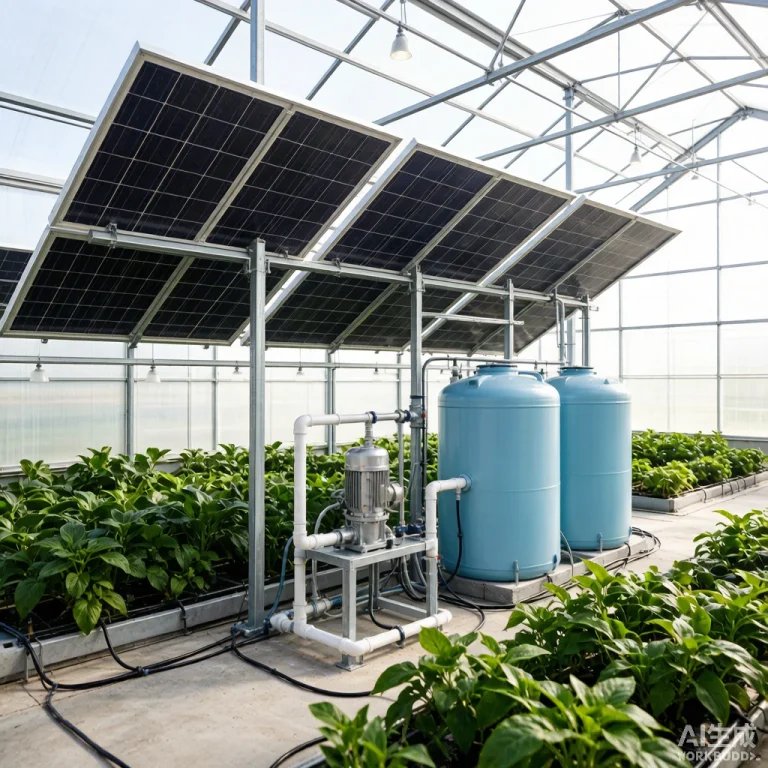
- Buffer tanks—an elevated tank between stages decouples lift, settling and return so a cloudy hour never stalls the train.
- Control—a hybrid controller keeps treatment running through extended cloud by topping up from a small generator only when the battery is low.
Solar vs Diesel Treatment Pumping
| Factor | Diesel Treatment Pumping | Solar Treatment Pumping |
|---|---|---|
| Energy cost | Per run-hour, perpetual | Zero after install |
| Compliance risk | Fuel-out can halt treatment | Buffer keeps train moving |
| Footprint | Gen + fuel store on site | Panels + small battery |
| Best fit | Grid-connected plants | Off-grid / remote mines |
Halted treatment is a compliance and recovery risk; solar with buffer makes the train resilient precisely where fuel logistics are weakest.
Frequently Asked Questions
Can solar handle abrasive mine water?
Yes—size the raw-water lift for sediment with abrasion-resistant wet-ends and screened intakes; clarified streams use standard pumps. Our abrasive-water guide covers the details.
What about night-time treatment?
Treatment is mostly a daytime duty; a tank buffer carries settling and return through the night, and a hybrid tops up only in extended cloud.
Does treating water save money beyond energy?
Yes—reuse cuts the draw on your source bore or river and reduces the volume needing discharge consent, lowering both cost and compliance exposure.
Will solar run the dosing too?
It can—reagent dosing is a small, precise load our solar dosing guide covers, and it runs off the same array.
Related Articles
- Solar Pumps for Wastewater and Effluent Reuse
- Solar Pump Selection for Gold Mine Chemical and Reagent Dosing
- Solar Pump Selection for Abrasive and Sediment-Laden Water
- Explore KINBO Solar Pump Products
Get a Solar Water-Treatment Pump Set
Share KINBO your raw-water quality, treatment stages and flow rates, and we will specify the lift, sludge-transfer and return pumps—plus the solar array and buffer—to run your gold-mine water treatment off-grid. Contact our team for a tailored quote.
Published by KINBO · September 22, 2026 · Category: Application Cases