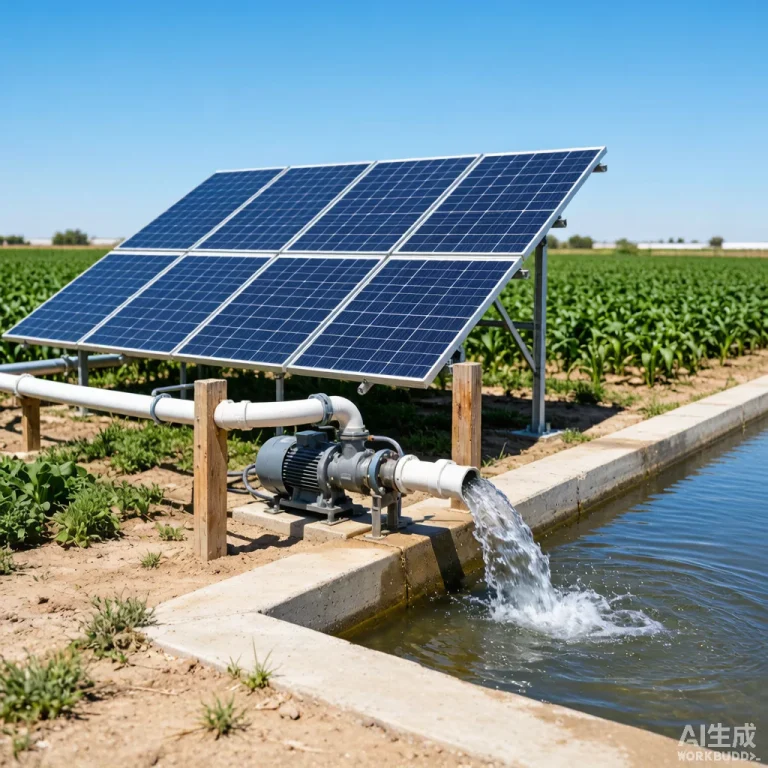
Solar Pump Recycling and Circular Economy: End-of-Life Management for Off-Grid Water Systems
Introduction
Solar pumping is often sold as green, but the greenest watt is the one you do not have to mine again. As off-grid water systems multiply across farms, villages and camps, their end-of-life footprint is becoming a real question for buyers, donors and regulators. A solar pump recycling and circular-economy approach treats the unit as a bank of recoverable materials—copper, steel, magnets, glass and electronics—rather than as scrap. Done deliberately, it cuts lifecycle cost and closes the loop on the very sustainability story these systems tell. Manufacturers such as KINBO are increasingly designing for disassembly so that a retired unit returns value instead of landing in a landfill.
Table of Contents
Why Circularity Matters for Solar Pumps
Solar pumps are unusually recyclable compared with diesel sets: there is no fuel, no oil, and a high share of mass is valuable metal. But the value is only captured if the system is collected and separated correctly. For aid-funded programs with hundreds of units, end-of-life planning is now a procurement criterion, not an afterthought. A circular approach also extends the useful life before recycling is even needed—refurbishment and spare parts keep a working pump in service far longer than a replace-on-failure model.
What Is Actually Recoverable
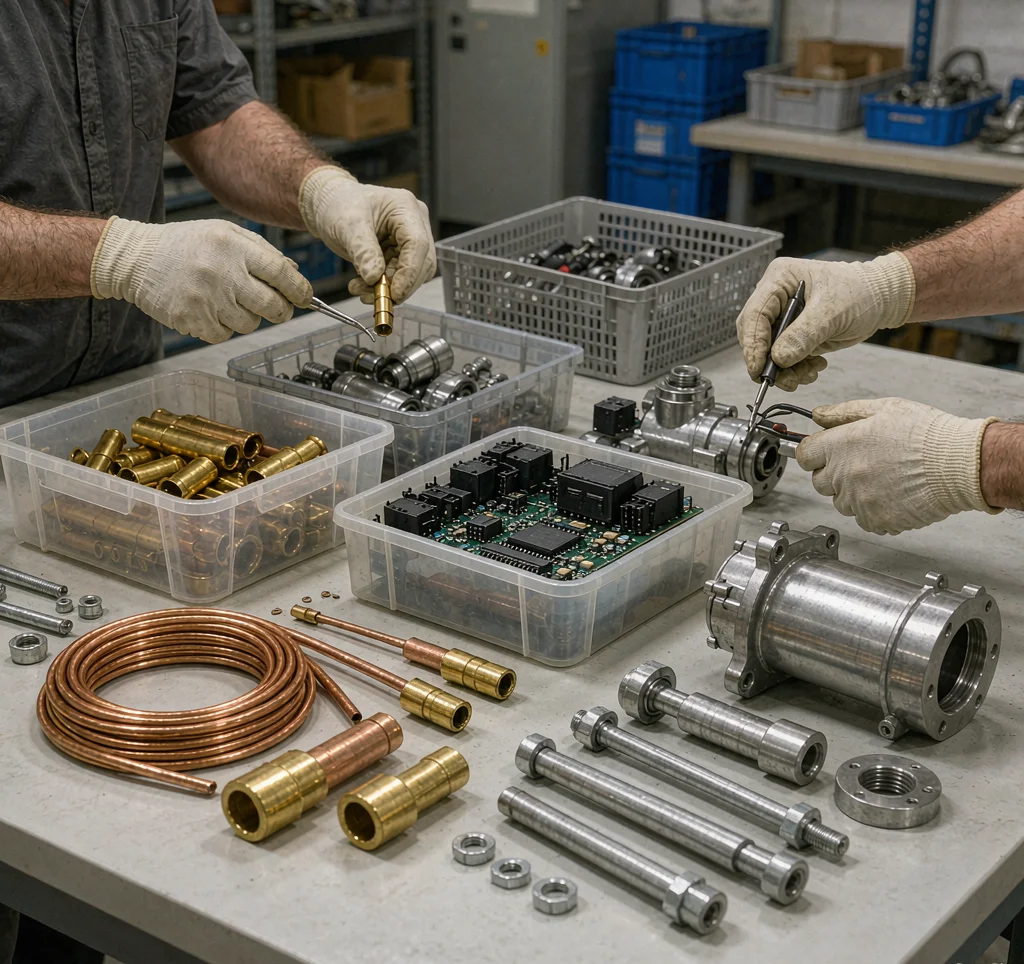
A retired solar pump is mostly high-value material if sorted well:
| Material | Source Component | Recovery Value |
|---|---|---|
| Copper | Motor windings, cable | High (dense, redeemable) |
| Steel / aluminium | Pump body, frame, mounts | Medium (bulk scrap) |
| Permanent magnets | Rotor (if PM motor) | High (rare-earth) |
| Electronics | Controller PCB, MPPT | Medium (refurbish/recover) |
| Glass + aluminium | PV module frame | Medium |
Designing for Disassembly and Reuse
Products designed for the loop share a few traits:
- Standard fasteners instead of welds or adhesives at service points.
- Click-in controller modules that swap without replacing the whole unit.
- Clearly labelled material types to speed sorting at end of life.
- Cables with connectors that release without cutting.
- A published exploded diagram so local technicians can dismantle safely.
Take-Back and Refurbishment Programs
The most mature programs pair collection with refurbishment. A returned controller can be rebuilt, a cleaned pump body refitted with new seals, and only the truly end-of-life fraction sent to smelters. KINBO operates a refurbishment path through its OEM/ODM and take-back programs so that cores are recovered rather than discarded, and buyers specifying fleets should ask for a take-back clause in the supply contract. The economics work best at scale, where a container of returned units justifies the logistics.
A Circular-Economy Scorecard for Buyers
When evaluating suppliers, score them on these points:
| Criterion | What to Ask the Supplier |
|---|---|
| Modular design | Are major assemblies separable without cutting? |
| Spare parts availability | Are wear parts stocked for 10+ years? |
| Take-back option | Does the maker offer return or refurbish? |
| Material declaration | Is content documented for recyclers? |
| Expected lifespan | What is the design service life? |
Frequently Asked Questions
Are solar pumps actually worth recycling?
Yes. The copper, steel, magnets and electronics carry real recoverable value, and correct separation avoids hazardous e-waste.
What is the hardest part to recycle?
The PV module and the mixed electronics; both need specialist handlers, while metals are straightforward to reclaim.
Does refurbishment beat recycling?
Usually. Extending a working unit’s life delays recycling entirely and is the higher-value circular step.
Should take-back be in the contract?
For fleet or aid-funded buys, yes—a take-back or refurbishment clause secures end-of-life value and compliance.
For B2B buyers specifying sustainable, recoverable solar pump fleets, contact KINBO for competitive FOB pricing and take-back program details.