South Asia Solar Water Pump Market Analysis 2026: Growth Drivers, Key Countries and Opportunities
South Asia Solar Water Pump Market Analysis 2026: Growth Drivers, Key Countries and Opportunities
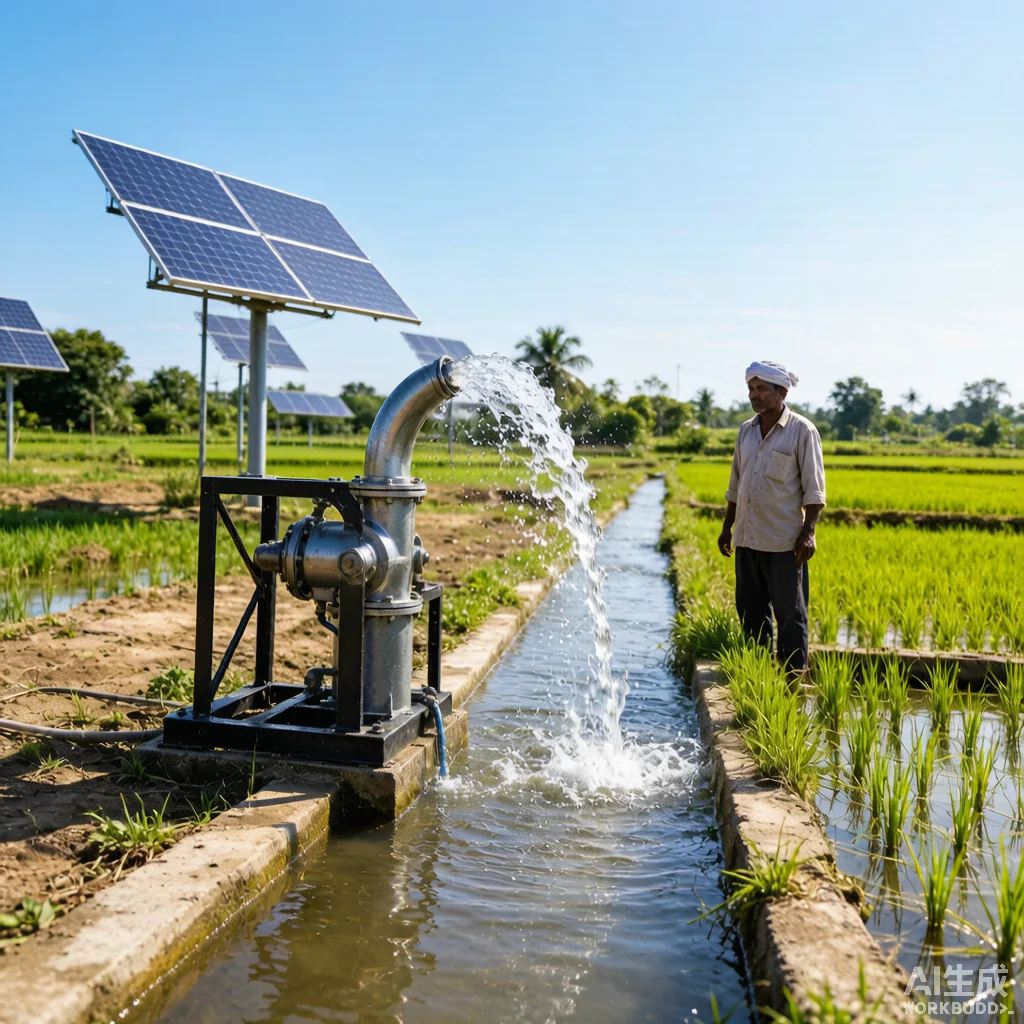
Introduction
South Asia is home to the world’s largest and fastest-growing solar water pump market. With more than 1.8 billion people, an agriculture-dominated rural economy, and some of the highest solar irradiation on earth, the region has become the global proving ground for solar irrigation. Government programs have pushed adoption to unprecedented scale, while private demand driven by diesel displacement continues to expand the addressable market.
KINBO has supplied solar pumping systems to distributors and project developers across South Asia for over a decade. This analysis maps the growth drivers, the key country markets, the subsidy and policy landscape, and the practical considerations for exporters entering the region in 2026. For a complementary view, see our analysis of the Latin America solar pump market.
Table of Contents
Growth Drivers Shaping the Market
Several structural forces are converging to make South Asia the epicenter of solar pumping demand.
- Government subsidy programs: Large-scale initiatives, most notably India’s PM-KUSUM scheme, subsidize a significant share of the cost of solar pumps for farmers, creating a massive volume market.
- Diesel and grid cost pressure: Rural diesel is expensive and electricity supply is often unreliable, making solar an increasingly attractive economic alternative.
- Groundwater management: As water tables fall, farmers need deeper, more efficient pumping — a demand that solar DC and AC/DC pumps are well suited to meet.
- Abundant irradiation: Most of South Asia receives 5 to 6 kWh per square meter per day, among the best solar resources in the world.
The market has shifted decisively from early pilot projects to a mature, subsidy-supported but increasingly self-sustaining market. This transition matters for exporters: the opportunity is no longer just government tenders, but a broad base of commercial buyers seeking reliable, durable equipment.
Key Country Markets
South Asia is not a single market but a set of distinct national markets at different stages of maturity. The table below summarizes the leading opportunities.
| Country | Market Maturity | Primary Demand Driver | Channel Characteristic |
|---|---|---|---|
| India | Very High (largest) | PM-KUSUM subsidies, irrigation | Government tenders + local manufacturers |
| Bangladesh | High (growing fast) | Diesel displacement, boro rice irrigation | NGO & microfinance channels |
| Pakistan | Medium | Tube well irrigation, energy crisis | Importers & distributor networks |
| Nepal | Medium (donor-led) | Hill-terrace irrigation, rural water | Donor & government programs |
| Sri Lanka | Emerging | Plantation crops, paddy irrigation | Agribusiness supply chains |
Subsidy and Policy Landscape
Government policy has been the single most important catalyst for solar pump adoption in South Asia. The flagship program is India’s PM-KUSUM, which targets the deployment of millions of solar pumps and grid-connected solar agricultural feeders. The program subsidizes a large share of the upfront cost, dramatically lowering the barrier for smallholder farmers.
Beyond India, the policy mix varies:
- Bangladesh: Programs backed by development finance institutions promote solar irrigation pumps to replace diesel, often delivered through microfinance and NGO networks.
- Pakistan: Provincial programs and donor initiatives target solar tube wells as a response to chronic energy shortages and rising electricity tariffs.
- Nepal and Sri Lanka: Smaller, donor-supported programs focus on hill irrigation and plantation agriculture.
For exporters, understanding the specific certification and subsidy eligibility requirements of each program is critical. In many cases, participation in a subsidy program requires local certification, testing, or a local manufacturing presence.
The Economics of Replacing Diesel Pumps
The most compelling commercial argument in South Asia remains the economics of displacing a diesel pump. A representative 2.2 kW (3 HP) solar system replacing a diesel pump running about 5 hours per day illustrates the payoff.
| Cost Item | Diesel Pump | Solar Pump |
|---|---|---|
| Upfront equipment cost | $400 | $2,900 |
| Annual fuel / energy cost | $1,350 | $0 |
| Annual maintenance | $230 | $65 |
| 5-year total cost | $8,300 | $3,225 |
| Payback period | — | ~1.8 years |
Note: Figures are illustrative estimates for a 2.2 kW system in 2026, assuming 5 hours of daily operation and prevailing fuel and maintenance costs in rural South Asia. Actual results vary by country, duty cycle, and local energy prices.
The payback of under two years — and even faster where subsidies apply — is the core reason solar pumping has scaled so rapidly across the region.
Opportunities and Challenges for Exporters
South Asia offers substantial volume, but it is also one of the world’s most competitive pump markets, with well-established local manufacturers and aggressive pricing.
Opportunities: The sheer scale of demand, particularly in India and Bangladesh, means even a modest market share represents meaningful volume. Buyers increasingly value durability, efficiency, and after-sales support over lowest price alone. Exporters who offer rugged, heat-tolerant equipment and help partners build local service capability can differentiate. See our solar irrigation solution for configurations suited to South Asian farming.
Challenges: Local price competition is intense, and subsidy programs often favor locally manufactured or locally certified products. Distribution across vast, thinly populated rural areas is difficult, and equipment must withstand extreme heat, dust, and monsoon conditions. Successful entry usually requires a local partner, a clear certification strategy, and a credible after-sales plan.
For a broader look at how solar pumping is expanding in neighboring regions, see our analysis of the Southeast Asia solar water pump market.
Frequently Asked Questions
Which South Asian country has the largest solar water pump market?
India has by far the largest solar water pump market in South Asia, driven by large-scale government programs such as PM-KUSUM that subsidize farmer adoption. Bangladesh, Pakistan, Nepal, and Sri Lanka have smaller but growing markets, each with distinct demand drivers ranging from irrigation to drinking water.
What is driving solar pump adoption in South Asia?
The main drivers are government subsidy programs, rising diesel and grid electricity costs, unreliable rural power supply, groundwater depletion that demands more efficient pumping, and abundant solar irradiation of 5 to 6 kWh per square meter per day across most of the region.
What challenges do solar pump exporters face in South Asia?
Key challenges include intense local price competition, complex subsidy certification requirements, fragmented rural distribution, the need for rugged equipment that tolerates heat and dust, and after-sales service coverage across vast rural areas. Successful exporters often partner with local firms or establish assembly and service networks.
How does PM-KUSUM affect the solar pump market?
PM-KUSUM is India’s flagship program to deploy millions of solar pumps and solarized agricultural feeders. By subsidizing a large share of the upfront cost, it has dramatically expanded the volume market and established solar pumping as a mainstream technology among Indian farmers.
Supplying Solar Pumps in South Asia?
For B2B distributors and project developers entering the region, contact KINBO for competitive FOB pricing, spare-part programs, and technical specifications.
August 19, 2026 | Author: KINBO Editorial Team
Related Articles