West Africa Solar Water Pump Market Analysis 2026: Growth Drivers, Key Countries and Opportunities
West Africa Solar Water Pump Market Analysis 2026: Growth Drivers, Key Countries and Opportunities
Introduction
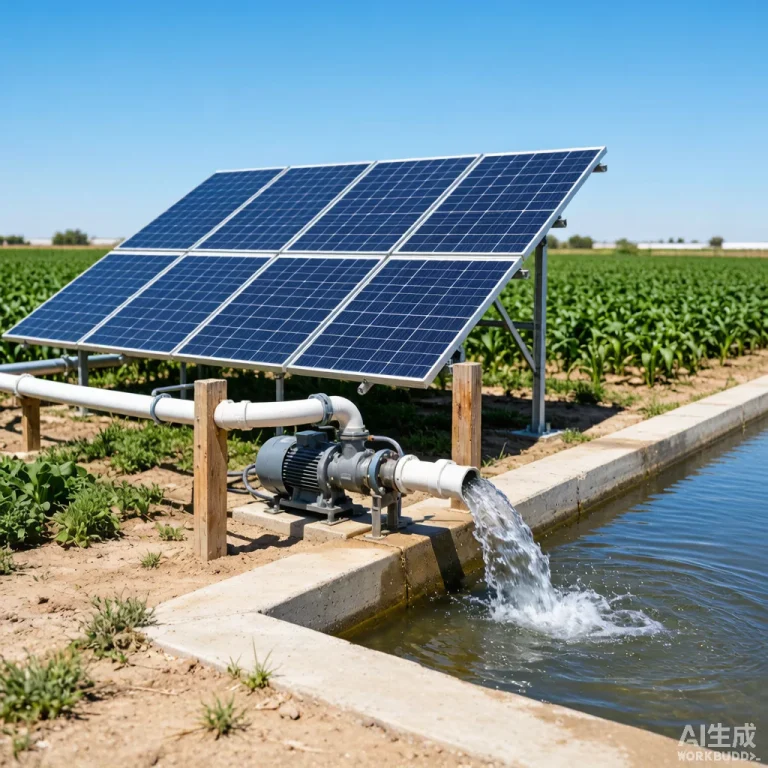
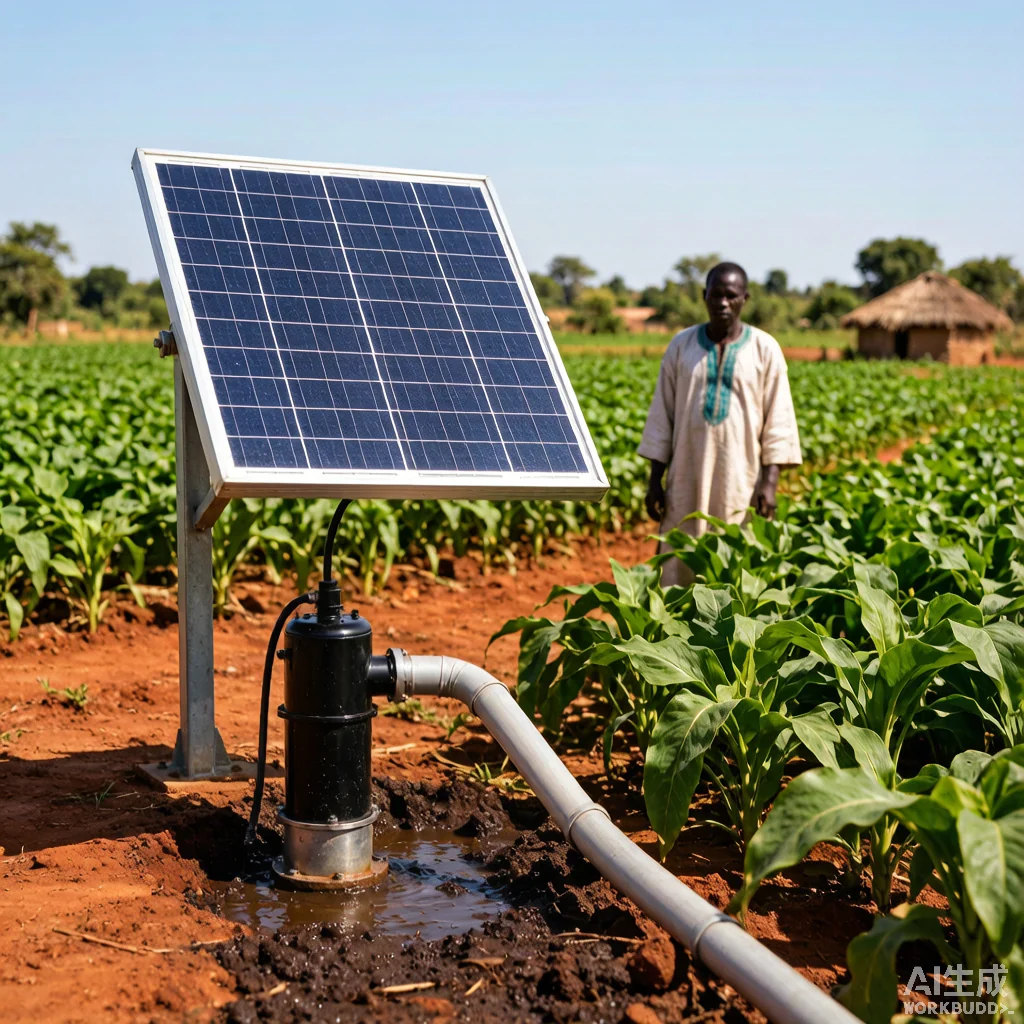
West Africa is emerging as one of the world’s most dynamic markets for solar water pumping. The region combines abundant solar irradiation — typically 5 to 6 kWh/m² per day across the Sahel — with a fast-growing agricultural sector that remains heavily dependent on rain-fed farming and expensive diesel pumps. For manufacturers, distributors, and project developers, this mismatch between energy abundance and water access represents a substantial commercial opportunity.
KINBO has been supplying solar pumping systems to African distributors and irrigation projects for over a decade. This analysis maps the growth drivers, the key country markets, the policy and financing landscape, and the practical considerations for exporters entering the region in 2026. For a complementary view of the broader continent, see our analysis of the East Africa solar water pump market.
Table of Contents
Growth Drivers Shaping the Market
Several converging forces are accelerating solar pump adoption across West Africa. Understanding these drivers is essential for anyone sizing the opportunity.
- Seasonal water scarcity: The Sahelian dry season can last six to eight months. During this period, surface water recedes and diesel costs spike, making reliable pumping a survival issue for crops and livestock.
- Diesel cost and supply volatility: Rural diesel is expensive and frequently adulterated or unavailable. Solar removes both the recurring cost and the supply-chain risk.
- Falling solar equipment prices: Panel and pump costs have declined substantially over the past decade, bringing solar within reach of smallholder cooperatives and mid-sized farms.
- Policy and donor programs: Governments and development finance institutions are increasingly funding solar irrigation as a climate-resilience and food-security measure.
The result is a market that has shifted from donor-subsidized pilot projects toward commercially viable, privately financed installations. This transition is important: it means demand is becoming more durable and less dependent on grant cycles.
Key Country Markets
West Africa is not a single market but a collection of distinct national markets with different demand profiles and maturity levels. The table below summarizes the leading opportunities.
| Country | Market Maturity | Primary Demand Driver | Channel Characteristic |
|---|---|---|---|
| Nigeria | High (largest volume) | Private diesel displacement, agribusiness | Dense importer & distributor network |
| Senegal | High (policy-led) | Government irrigation programs, horticulture | NGO & state project procurement |
| Ghana | Medium | Commercial farms, rural water supply | Mixed public-private channels |
| Mali & Burkina Faso | Medium (donor-led) | Smallholder irrigation, food security | Donor & NGO program channels |
| Côte d’Ivoire | Emerging | Cash-crop irrigation (cocoa, rubber) | Agribusiness supply chains |
Policy and Financing Landscape
Government and international programs have been the catalysts that de-risked solar irrigation in West Africa and created the demonstration effect now driving private adoption. Key initiatives include national rural electrification and irrigation programs, and financing from development institutions focused on climate adaptation and agricultural productivity.
Financing remains the single biggest bottleneck. Most smallholder farmers cannot pay the upfront cost of a solar pump, which typically ranges from a few hundred to several thousand dollars depending on capacity. The most successful models in the region have been:
- Pay-as-you-go (PAYG) and leasing: Enabled by mobile money, these spread the upfront cost over affordable installments and have proven highly effective in East Africa, now migrating into West Africa.
- Subsidized procurement: State and donor programs that bulk-purchase systems and distribute them to farmer cooperatives.
- Agribusiness outgrower schemes: Large buyers of cocoa, cotton, and horticultural crops finance pumps for their contracted farmers and recover the cost from produce.
For exporters, understanding which financing model dominates each country determines the right channel partner: a PAYG operator, a government tender, or an agribusiness buyer.
The Economics of Replacing Diesel Pumps
The most compelling sales argument in West Africa is the economics of displacing a diesel pump. Diesel is expensive, and rural delivery adds further cost and unreliability. A solar system has a higher upfront cost but near-zero operating cost.
Consider a representative 2.2 kW (3 HP) pump used for smallholder irrigation, running about 5 hours per day. The table below compares diesel and solar over a 5-year period, based on typical 2026 West African conditions.
| Cost Item | Diesel Pump | Solar Pump |
|---|---|---|
| Upfront equipment cost | $350 | $2,800 |
| Annual fuel / energy cost | $1,300 | $0 |
| Annual maintenance | $220 | $60 |
| 5-year total cost | $7,950 | $3,100 |
| Payback period | — | ~1.9 years |
Note: Figures are illustrative estimates for a 2.2 kW system in 2026, assuming 5 hours of daily operation and prevailing diesel prices in rural West Africa. Actual results vary by country, duty cycle, and local fuel and labor costs.
The payback of under two years is a powerful motivator, and it explains why diesel displacement is now the dominant driver of private solar pump purchases in the region’s larger markets.
Opportunities and Challenges for Exporters
For manufacturers and distributors, West Africa offers meaningful upside, but success depends on navigating several structural realities.
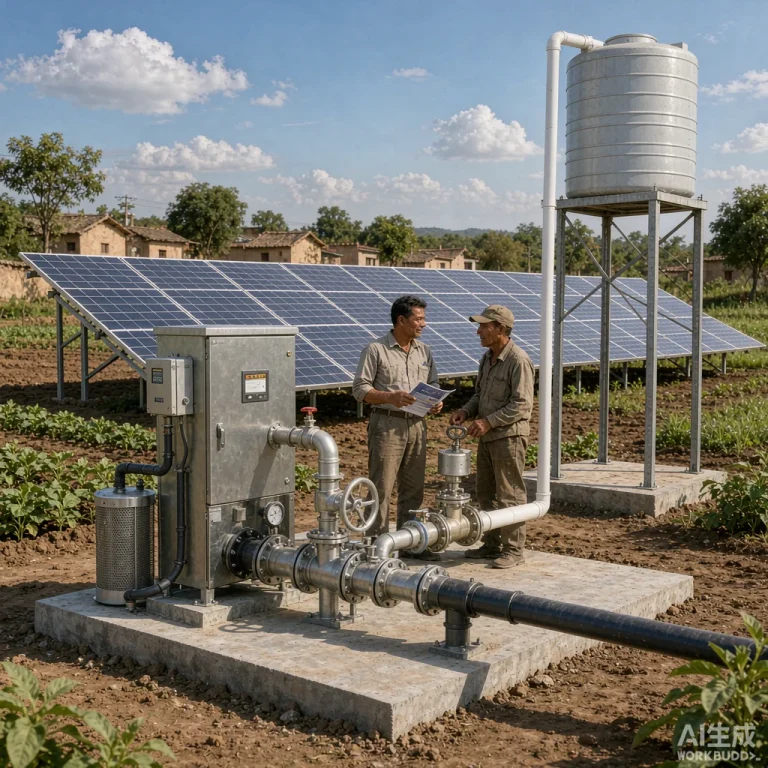
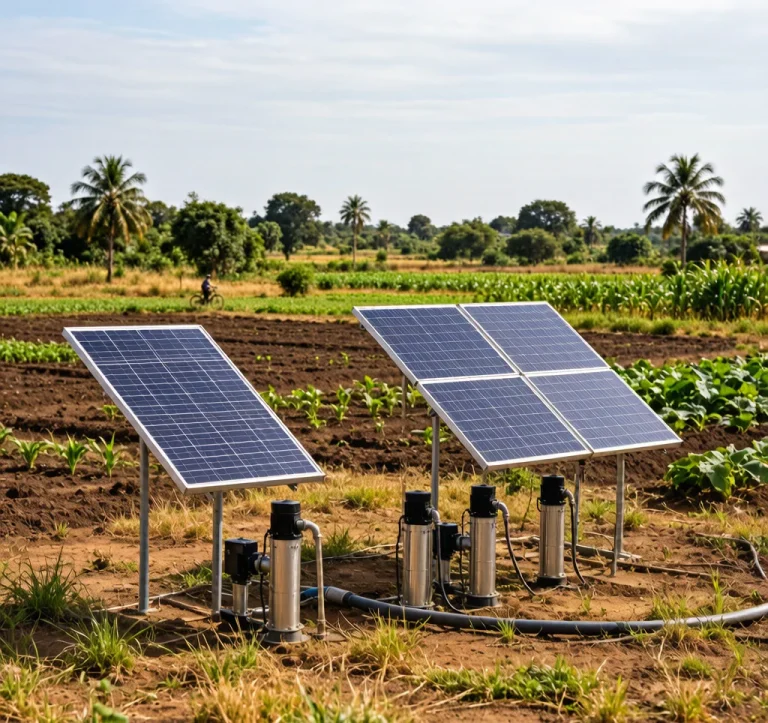
Opportunities: Strong and growing demand for both submersible and surface solar pumps; a preference for durable, heat-tolerant, low-maintenance equipment; and a channel that increasingly rewards suppliers who offer spare parts and after-sales support rather than box-dropping. A supplier that helps a local partner build a service capability gains a durable competitive edge. See our solar irrigation solution for product configurations tailored to smallholder farms.
Challenges: Access to end-user financing remains the main barrier to faster growth. Import duties and customs procedures vary by country and can add materially to landed cost. After-sales service is difficult to deliver across vast, thinly populated rural areas. And equipment must withstand extreme heat, dust, and seasonal flooding.
The exporters that succeed treat West Africa as a set of distinct markets rather than a monolith, select channel partners by financing model, and invest in local service capacity. For a global perspective on where solar pumping is heading, see our overview of the Latin America solar pump market.
Frequently Asked Questions
Which West African countries have the largest solar water pump markets?
Nigeria is the largest market by volume, driven by its population and strong agricultural base, followed by Senegal, Ghana, Mali, and Burkina Faso. Senegal and Burkina Faso lead in policy-driven adoption through government and donor-funded irrigation programs, while Nigeria’s growth is increasingly private-sector and diesel-displacement driven.
Why are farmers in West Africa switching from diesel to solar pumps?
Diesel fuel is expensive and supply chains are unreliable in many rural areas of West Africa. Solar pumps eliminate recurring fuel costs, require less maintenance, and provide reliable water during the long dry season. Payback periods of 2 to 3 years are common when replacing diesel pumps, after which water is essentially free.
What are the main challenges for solar pump exporters entering West Africa?
Key challenges include limited access to affordable financing for smallholder farmers, fragmented distribution and after-sales service networks, import duties and customs complexity, and a need for rugged equipment that tolerates heat, dust, and seasonal flooding. Successful exporters partner with local distributors who provide installation and maintenance.
How much solar radiation does West Africa receive for solar pumping?
Most of West Africa, especially the Sahel belt, receives 5 to 6 kWh per square meter per day, among the highest solar resource levels in the world. This makes solar pumping exceptionally productive, with most systems able to deliver their rated daily water volume for 6 to 8 hours per day.
Supplying Solar Pumps in West Africa?
For B2B distributors and project developers entering the region, contact KINBO for competitive FOB pricing, spare-part programs, and technical specifications.
August 14, 2026 | Author: KINBO Editorial Team
Related Articles