Solar Pump for Livestock Ranch: A Case Study in Automatic Stock-Watering and Labor Savings
Introduction
On a working ranch, hauling water to stock is a daily tax on time and labor, and troughs run dry exactly when animals need them most. A ranch that switched to automatic solar stock-watering changed that equation. This solar pump for livestock ranch case study looks at the design and the measured savings. KINBO supplied the surface pumping and controller hardware for the install.
Table of Contents
Site and Previous Routine
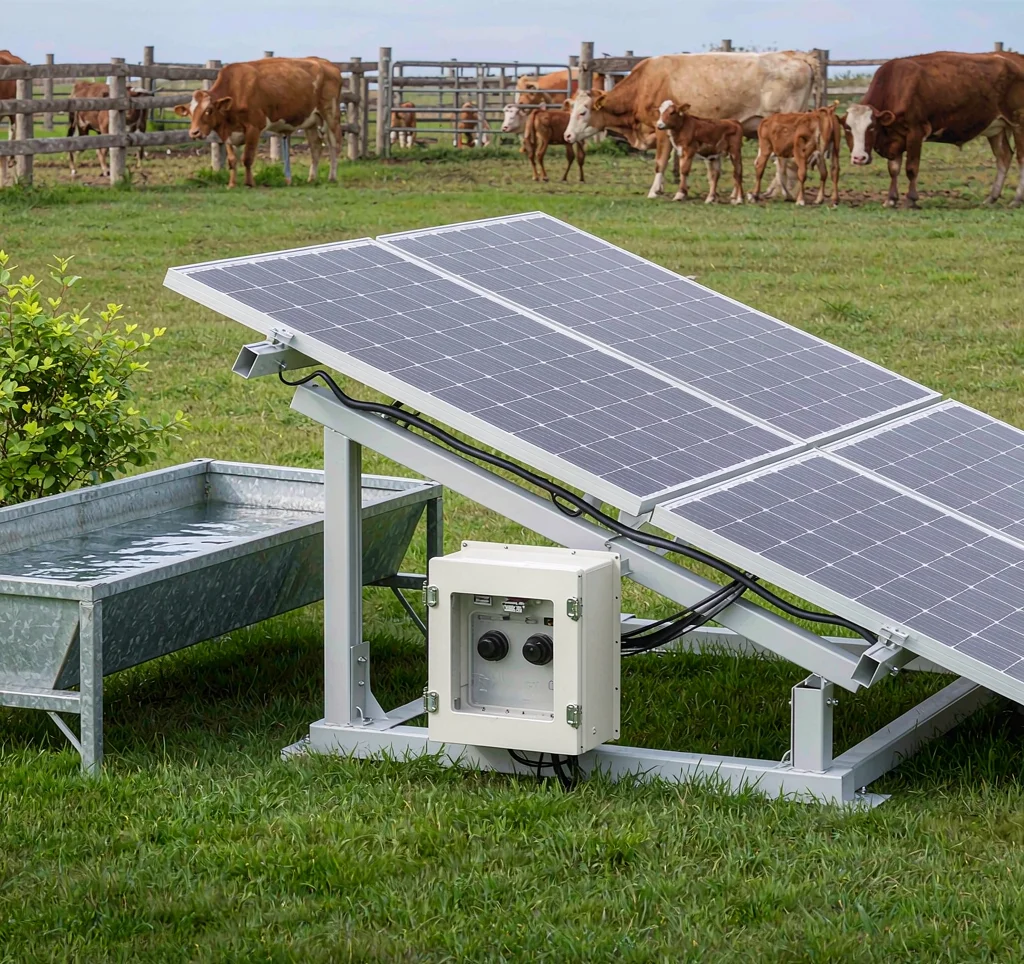
The ranch runs a few hundred head across scattered paddocks, each with a trough fed by a windmill or, failing that, by trucked water. Wind was unreliable, and during dry spells a worker spent hours daily moving water between paddocks. Dry-season stress had previously driven animals to overgraze near the only reliable windmill, damaging that patch of land. The goal was automatic, unattended watering at the main herd trough with no fuel and no daily labor.
System Design and Configuration
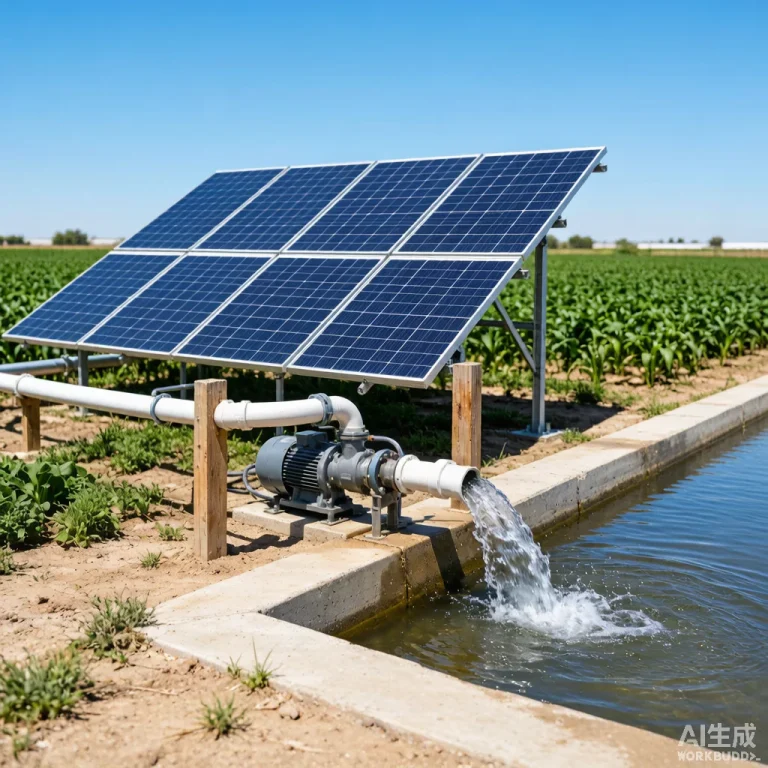
A surface solar pump lifts from a nearby pond to an elevated trough through a controller with dry-run and overflow protection, powered by a ground-mounted array sized for summer peak plus margin. Float switches keep the trough topped without attention.
| Component | Specification |
|---|---|
| Pump | Surface solar pump, ~1.1 kW |
| Solar array | 5 x 400 W panels |
| Storage | Elevated trough with float |
| Control | MPPT, dry-run + overflow |
The pump family is detailed in our KINBO solar surface pumps range used here. Redundancy was built in: a second trough on a timer rotates grazing pressure so no single point fails the whole herd.
Measured Labor and Herd Impact
| Metric | Before | After (solar) |
|---|---|---|
| Daily water labor | Hours per day | Near zero |
| Trough dry-outs | Frequent in dry season | Eliminated |
| Fuel cost | Recurring | None |
With water assured, the herd spent less energy walking to distant sources and condition improved measurably. The freed labor was redirected to fencing and calving work that had been deferred for years. The ranch estimated the recovered labor alone justified the install within two seasons, before counting the fuel and vet bills avoided by healthier stock.
Lessons for Other Ranches
- Size the array for the driest, brightest-stress month plus margin, not the annual average.
- Use float control at the trough so the system runs unattended without overflow.
- Keep one spare controller module on site; it is the only item likely to need swapping.
Most importantly, reliable water let the operator rotate pastures on a plan rather than on whichever trough still had water, which improved land use across the whole ranch. The takeaway: automatic solar stock-watering is less about the pump and more about giving animals reliable water without a person in the loop every day.
Frequently Asked Questions
Can solar handle a large herd?
Yes, by sizing the pump and trough for peak demand and adding capacity in stages as the herd grows.
What if the pond level drops?
Dry-run protection stops the pump before damage; a second source or deeper intake extends the season.
Is daily labor really eliminated?
For the automated trough, yes; only periodic checks and panel cleaning remain.
Does it work in winter?
With correct array margin it keeps up in weaker sun; very cold sites may need freeze protection on lines.
For B2B buyers deploying solar pumping for livestock and ranch watering, contact KINBO for competitive FOB pricing and technical specifications.
Related Articles
- Solar Pump for Drip Irrigation Systems
- Solar Pump for Greenhouse Irrigation Case Study
- Explore KINBO Solar Surface Pumps