Solar Pump for Greenhouse Irrigation: A Case Study in Year-Round Crop Watering, Yield and Reliability
Introduction
Greenhouses turn water into yield, and solar pumping turns sunlight into that water for free. A grower struggling with grid outages and rising electricity bills replaced mains pumping with a dedicated solar set and changed the economics of year-round production. This solar pump for greenhouse irrigation case study walks through the design and the measured result. KINBO supplied the submersible and controller for the install.
Table of Contents
Site and Growing Cycle
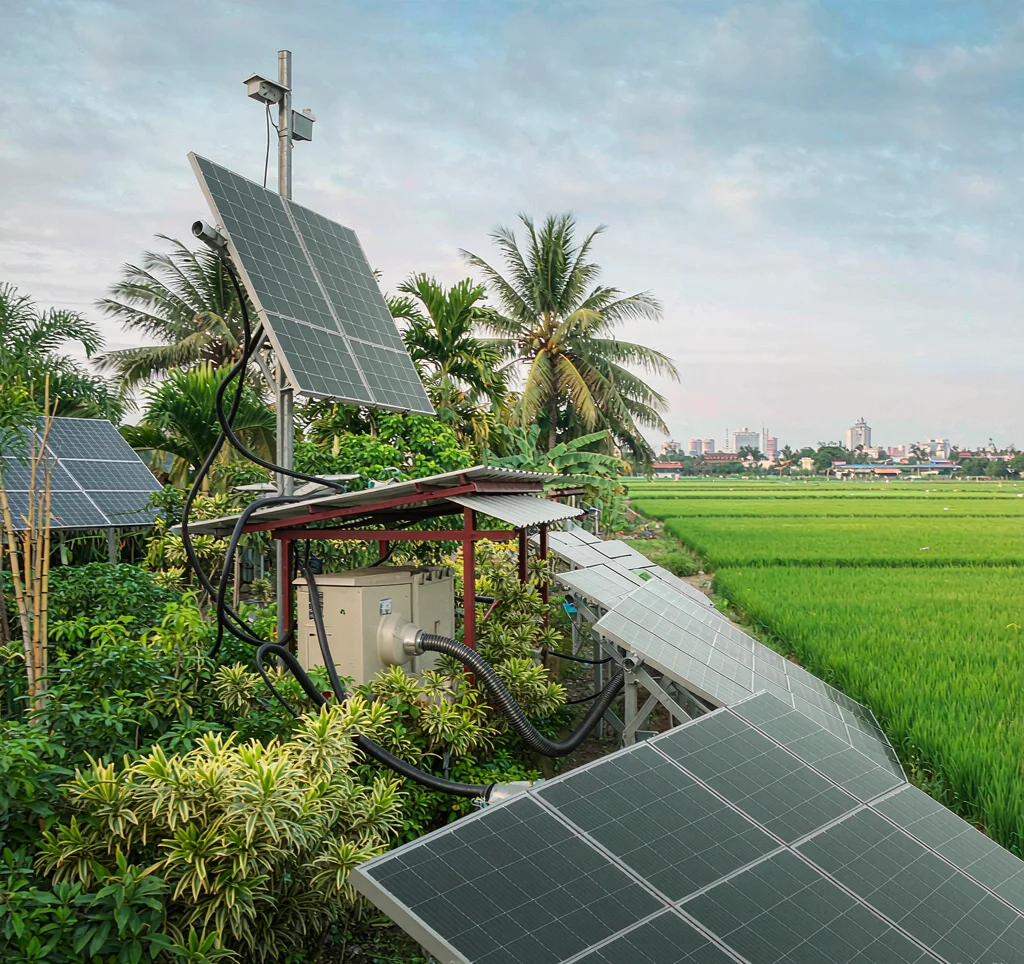
The greenhouse covers roughly 800 m2 of mixed vegetables on a drip network, previously fed by an electric pump on an unreliable rural grid. Outages during peak heat damaged seedlings, and the electricity bill ate into margins. The goal was autonomous daytime irrigation with no dependence on the grid during the hottest, brightest hours when plants needed water most. Previously, a single afternoon outage could undo a week of careful hardening, so the change was as much about managing risk as cutting cost.
System Design and Configuration
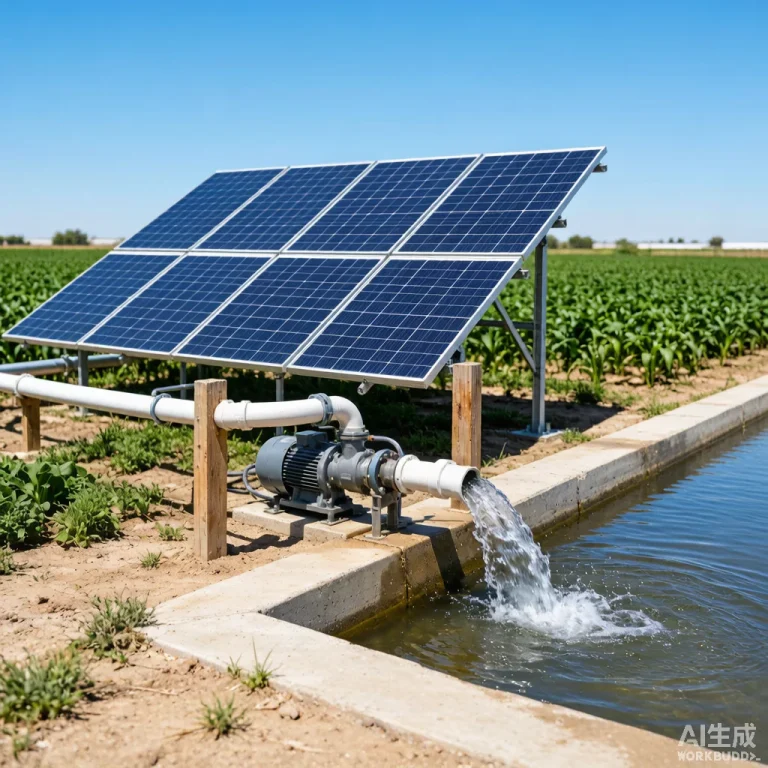
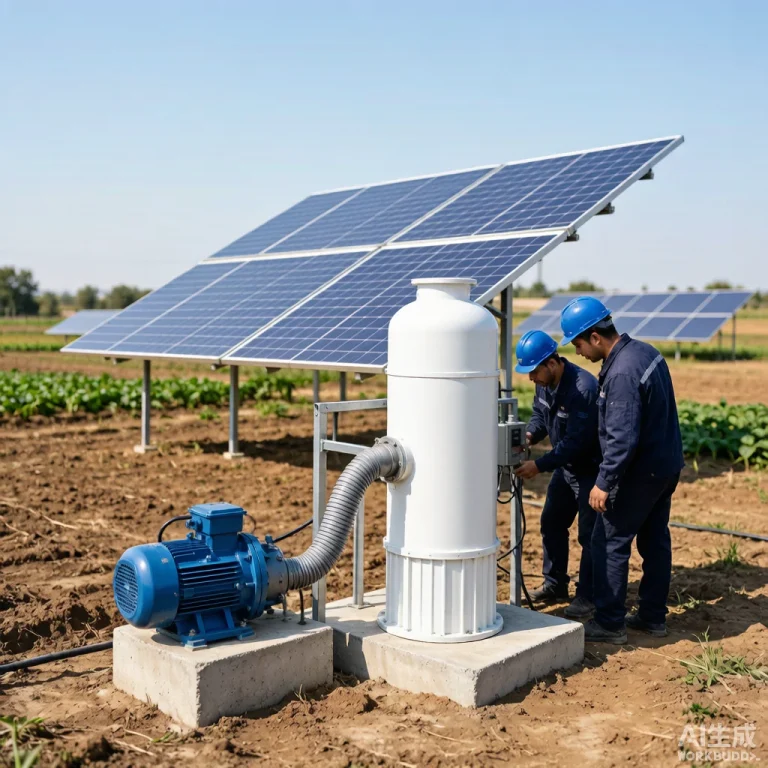
A DC submersible in a 30 m well feeds a pressure tank that drives the drip lines through a simple controller with dry-run protection. The array was sized for midday peak demand plus margin, so the tank stays charged through the bright window and bleeds off gradually afterward.
| Component | Specification |
|---|---|
| Pump | DC submersible, ~0.75 kW |
| Solar array | 4 x 400 W panels |
| Storage | Pressure tank, drip-fed |
| Control | MPPT with dry-run protection |
The pump family is detailed in our KINBO solar submersible pumps range used here. Because the array tracks the greenhouse’s own peak demand, the two systems reinforce each other: more sun means both more light for plants and more water available.
Measured Results and Yield
| Metric | Before (grid) | After (solar) |
|---|---|---|
| Pumping energy cost | High, metered | Near zero |
| Outage-related loss | Recurring | Eliminated |
| Irrigation consistency | Variable | Steady daytime |
Beyond cost, the grower reported fewer heat-stress losses because watering no longer depended on the grid during the afternoon peak. Seedling survival and uniformity improved, supporting a second planting cycle that had previously been too risky.
Operating Lessons
- Size the array to the greenhouse’s own peak, not the annual average, so the tank never runs dry mid-afternoon.
- Keep the drip filter clean; solar cannot fix a clogged line, only deliver the pressure behind it.
- Train one operator on dry-run resets and panel washing so the system is not dependent on outside help.
The takeaway is that greenhouses and solar pumping are a natural pair: both are driven by the same sun, and together they turn a volatile cost center into a predictable one.
Frequently Asked Questions
Can a greenhouse run fully on solar pumping?
For daytime irrigation, yes. A pressure tank carries the load between solar peaks and removes grid dependence.
What size system does a small greenhouse need?
It scales with area and crop water demand; the case here used a ~0.75 kW pump and a 1.6 kW array for 800 m2.
Does it work in the cloudy season?
With correct array margin and a tank, yes for daytime; night irrigation would need battery or hybrid input.
Is maintenance heavy?
Light: panel washing, filter cleaning, and occasional controller checks, far less than grid or diesel pumping.
For B2B buyers deploying solar pumping for greenhouse and crop irrigation, contact KINBO for competitive FOB pricing and technical specifications.
Related Articles
- Solar Water Pump Market in Africa 2026
- Solar Pump Float Switches and Water Level Control
- Explore KINBO Solar Submersible Pumps