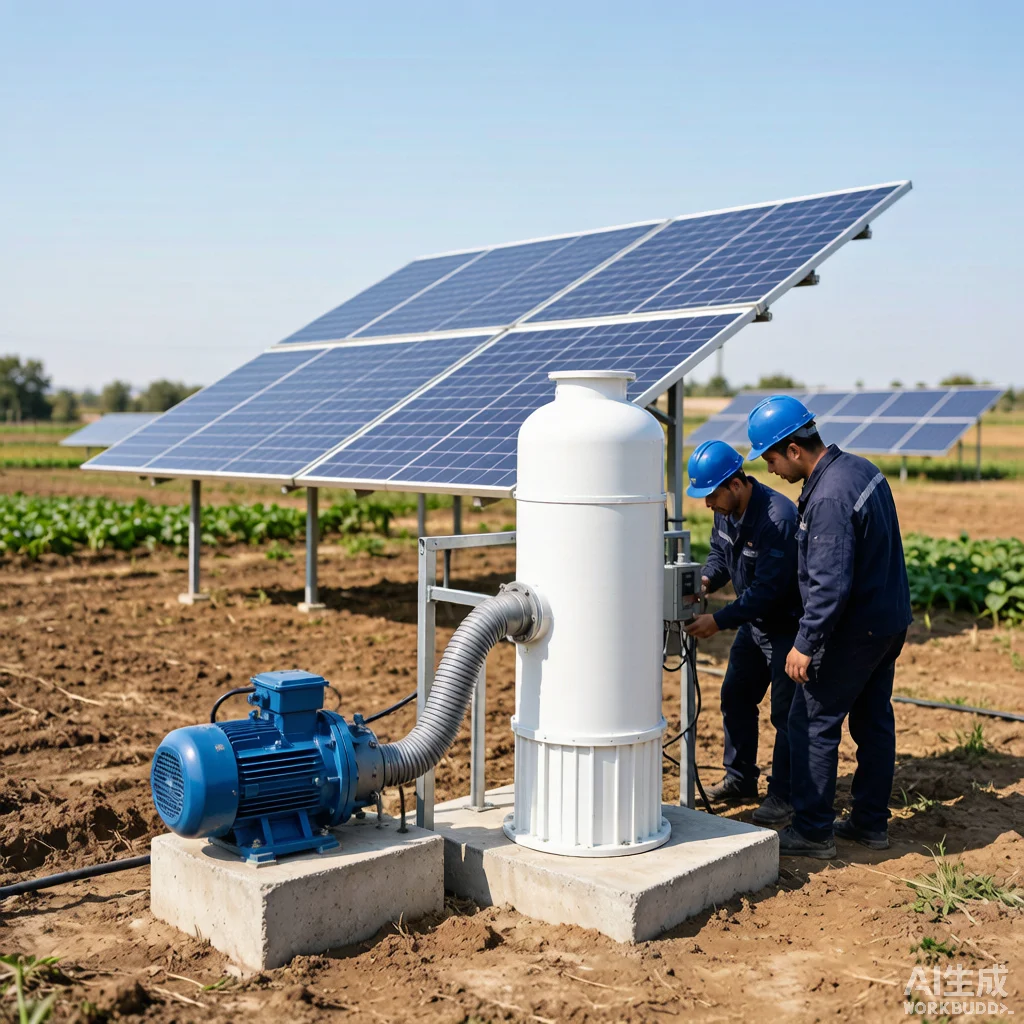
Government Rural Water Supply Programs Driving Solar Pump Adoption
Introduction
Government rural water supply programs have emerged as the single largest demand driver for solar water pumping technology in developing economies. According to the World Bank, approximately 2.2 billion people lack access to safely managed drinking water, with the vast majority residing in rural areas of Sub-Saharan Africa and South Asia where grid electricity is unreliable or nonexistent. In response, national governments and multilateral development organizations have launched unprecedented subsidy and procurement initiatives aimed at replacing diesel-powered pumps with solar alternatives. India’s PM-KUSUM scheme alone targets the installation of 2.8 million solar pumps by 2026, while the African Development Bank’s Desert to Power initiative aims to deploy solar pumping infrastructure across 11 Sahelian countries. KINBO actively participates in government tender processes across multiple regions, supplying solar pump systems that meet the stringent technical specifications and certification requirements of publicly funded rural water projects. For B2B distributors and system integrators, understanding the structure, timelines, and compliance requirements of these government programs is essential to capturing a share of this rapidly growing institutional market segment. This article examines major government rural water programs worldwide, analyzes their procurement mechanisms and eligibility criteria, and provides practical guidance for businesses seeking to participate in publicly funded solar pump deployments.
Table of Contents
Overview of Major Government Programs
The global landscape of government rural water supply programs can be categorized into three tiers: large-scale national subsidy schemes, multilateral development bank-funded infrastructure projects, and bilateral aid programs implemented through international development agencies. India’s PM-KUSUM (Pradhan Mantri Kisan Urja Suraksha evam Utthaan Mahabhiyan) is the world’s largest solar pump subsidy program, with Component B specifically targeting the replacement of 2.8 million diesel agricultural pumps with standalone solar equivalents. The program offers a 60% capital subsidy split between central and state governments, with farmers contributing the remaining 40% through bank financing facilitated by NABARD. Total program budget exceeds INR 34,000 crore (approximately USD 4.1 billion), making it the single largest concentrated demand pool for solar pumps globally.
In Sub-Saharan Africa, the primary mechanism is not a single national program but a constellation of World Bank, African Development Bank (AfDB), and bilateral donor-funded projects. The AfDB’s Desert to Power initiative encompasses USD 20 billion in investment commitments across 11 countries in the Sahel region, with solar water pumping designated as a priority component for agricultural transformation. The World Bank’s Kenya Off-Grid Solar Access Project (KOSAP) allocated USD 150 million specifically for solar water pumping and solar home systems in 14 underserved counties, while Ethiopia’s National Electrification Program earmarks solar pumping as a key intervention for rural water supply in areas beyond the grid extension horizon.
In Southeast Asia, Bangladesh’s Infrastructure Development Company Limited (IDCOL) has financed over 1,500 solar irrigation pumps through a combination of grant and concessional loan mechanisms, while Myanmar’s National Electrification Project (NEP) includes a dedicated solar pumping component funded by a USD 400 million World Bank credit. Morocco’s National Irrigation Water Saving Program (PNEEI) integrates solar pumping with drip irrigation conversion, targeting both water conservation and energy cost reduction for smallholder farmers. Each of these programs operates with distinct technical specifications, certification requirements, and procurement procedures that suppliers must navigate to participate successfully.
Case Studies: India PM-KUSUM Program
The PM-KUSUM program’s Component B (standalone solar agricultural pumps) provides the most instructive case study of how large-scale government subsidy programs reshape B2B solar pump supply chains. The program operates on a cluster-based tendering model where State Nodal Agencies (SNAs) issue tenders for specific districts or blocks, with individual cluster sizes ranging from 500 to 5,000 pumps. Successful bidders — typically pump manufacturers or consortiums comprising manufacturers and local installation partners — are responsible for supply, installation, and 5-year comprehensive maintenance contracts. The technical specifications mandate minimum MPPT efficiency of 97%, motor efficiency of 85% or higher for submersible pumps up to 7.5 HP, and a minimum 5-year warranty on the complete system.
The program’s impact on the B2B supply chain has been transformative. Prior to PM-KUSUM, the Indian solar pump market was fragmented, with hundreds of small regional assemblers competing on price with minimal quality differentiation. The program’s standardized technical specifications and mandatory Bureau of Indian Standards (BIS) certification requirements have driven consolidation, with approximately 15-20 major manufacturers now accounting for over 70% of PM-KUSUM pump supply. This consolidation has created opportunities for international manufacturers who can achieve BIS certification and establish the local manufacturing or assembly presence required to qualify for tender participation. The 5-year maintenance obligation has also created a substantial aftermarket for spare parts and service, estimated at 8-12% of the initial system cost annually.
A critical lesson from PM-KUSUM for B2B suppliers in other markets is the importance of engaging early in the policy formulation process. Manufacturers that participated in technical committee consultations and provided field performance data during the program’s pilot phase were better positioned to influence the final technical specifications and understand the compliance pathway. Companies that entered the market only after tenders were issued faced a steep learning curve in navigating the BIS certification process, which typically requires 4-8 months for new product categories.
African Rural Water Initiatives
African government rural water programs present a fundamentally different operating environment from the centralized Indian model, characterized by greater institutional fragmentation, more diverse funding sources, and lower per-project procurement volumes that nonetheless aggregate to substantial total demand. The typical implementation pathway involves a national rural water supply agency issuing tenders for district-level or county-level water schemes, with individual tenders covering 10-50 pump installations financed through a combination of government budget allocations and donor funds. Tenders are frequently published through the national procurement portal and may also be notified through development partner platforms such as the World Bank’s Development Business (UN Development Business) or the AfDB’s procurement notices.
Technical requirements in African programs place particular emphasis on durability and serviceability given the logistical challenges of after-sales support in remote rural locations. Common specifications include stainless steel impellers and wear rings as standard (rather than optional upgrades), IP68-rated submersible motors with minimum 1.5 service factor, controller enclosures with IP65 or higher ingress protection, and capability for remote monitoring via GSM or satellite communication. The requirement for local service capability — typically defined as having a service center or authorized service partner within a specified radius of the installation site — is a critical qualifying criterion that effectively requires B2B suppliers to invest in regional distribution and service infrastructure.
The financing structure of African programs also creates distinct working capital requirements for B2B suppliers. Unlike the Indian model where the subsidy is disbursed to farmers who then pay the supplier, African programs typically operate on milestone-based payment schedules tied to delivery, installation, commissioning, and acceptance testing milestones. The payment cycle from initial purchase order to final acceptance can extend 180-270 days, requiring suppliers to maintain substantial working capital or secure trade finance facilities. For procurement professionals evaluating market entry strategies, the working capital requirement is often a more significant barrier than technical compliance or price competitiveness.
Impact on B2B Supply Chain
Government rural water programs influence the B2B solar pump supply chain through multiple channels beyond the direct procurement volumes they generate. The standardization of technical specifications across public procurement programs creates de facto industry standards that private-sector buyers increasingly reference in their own procurement documents. When India’s Ministry of New and Renewable Energy (MNRE) specifies a 5-year comprehensive warranty and 25-year solar panel warranty for PM-KUSUM pumps, these requirements gradually become market norms that shape customer expectations across the entire region, not just in government-funded projects.
Government programs also accelerate technology transfer and local manufacturing development. Several African countries, including Kenya, Ethiopia, and Nigeria, have introduced local content requirements that mandate a minimum percentage of locally sourced components or local assembly for pumps supplied under government programs. For international manufacturers, this creates both a compliance requirement and a strategic opportunity: establishing local assembly operations not only satisfies tender eligibility criteria but also reduces logistics costs, shortens delivery lead times, and provides a platform for regional export. KINBO supports its distribution partners in navigating these local content requirements by providing semi-knocked-down (SKD) kits that enable local assembly while maintaining quality control over critical components such as motors, controllers, and impeller sets.
The warranty and maintenance obligations embedded in government programs also reshape the aftermarket services landscape. The 5-year comprehensive maintenance requirement common to most major government programs creates a multi-year service revenue stream for B2B distributors who invest in technical service capabilities, while simultaneously raising the barrier to entry for suppliers who compete solely on initial purchase price without committing to long-term service support. Forward-thinking distributors are using government program participation as a vehicle to build the service infrastructure, spare parts inventory, and trained technician networks that generate higher-margin recurring revenue from both government-installed and privately purchased pump systems.
Frequently Asked Questions
Q: Which countries offer the best solar pump subsidies for farmers and rural communities?
A: India currently offers the most generous subsidy framework globally through PM-KUSUM, with 60% central and state government subsidy covering the majority of system cost. Bangladesh follows with IDCOL financing that combines a 50% grant with 35% concessional loan at 6% interest. Morocco provides up to 80% subsidy for solar pumping systems integrated with drip irrigation under PNEEI. Kenya’s KOSAP program offers up to 50% capital subsidy for community water projects. Ethiopia provides 100% financing for solar pumps in selected woredas through the National Electrification Program, though this is financed through concessional loans rather than pure grants. The effective subsidy level for B2B suppliers depends not only on the nominal percentage but also on payment certainty: India’s centralized mechanism generally provides faster and more reliable payment than African programs where disbursement delays of 6-12 months beyond the contracted payment schedule are common. When evaluating market opportunities, procurement professionals should consider both the subsidy rate and the payment reliability as equally important factors in cash flow planning.
Q: How do government tenders work for solar pump procurement, and what are the key qualifying criteria?
A: Government solar pump tenders typically follow a two-stage process. The first stage is a pre-qualification (PQ) or Expression of Interest (EOI) phase where bidders submit documentation demonstrating technical capability, financial standing, and past performance. Key qualifying criteria usually include: minimum annual turnover (typically USD 1-5 million depending on tender size), evidence of successful completion of similar projects within the past 3-5 years, ISO 9001 quality management certification, product certifications (BIS in India, IEC standards in African tenders, CE marking in some markets), and audited financial statements for the past 3 years. The second stage is the financial bid submission, where pre-qualified bidders submit priced proposals. Most government tenders use a lowest-cost technically compliant (LCTC) evaluation method, though some programs (notably World Bank-funded projects) use a quality-and-cost-based selection (QCBS) method that weights technical capability at 60-80% and price at 20-40%. B2B suppliers should also be aware that many government programs include mandatory local content or local service presence requirements that can only be met through partnerships with local companies or establishment of in-country operations.
Q: What product certifications are typically required for solar pumps supplied to government-funded projects?
A: Certification requirements vary by region and funding source. In India, BIS certification per IS 15240 (for solar photovoltaic water pumping systems) is mandatory for PM-KUSUM participation, along with MNRE approval for the specific pump model. World Bank-funded projects typically require compliance with IEC 62253 (solar photovoltaic pumping systems design qualification and performance measurements) and IEC 61730 (PV module safety qualification). African tenders frequently specify compliance with the Kenya Bureau of Standards (KEBS) standards, which are increasingly adopted as regional benchmarks, or the South African Bureau of Standards (SABS) for Southern African projects. European development bank-funded projects may require CE marking. Beyond product certifications, many tenders require the manufacturer to hold ISO 9001 (quality management) and ISO 14001 (environmental management) certifications. The certification process typically requires 4-12 months depending on the standard and the testing laboratory’s capacity, so B2B suppliers should initiate certification well in advance of pursuing specific tender opportunities. KINBO maintains current certifications for major international standards and can provide certification documentation as part of distributor tender support packages.
Positioning your business for government solar pump tenders? Partner with KINBO for certified products, tender documentation support, and technical compliance guidance.
Related Articles
- Global Solar Pump Subsidy Programs: Complete Regional Analysis
- Solar Pump Subsidies in South Asia: India, Bangladesh, and Nepal Programs