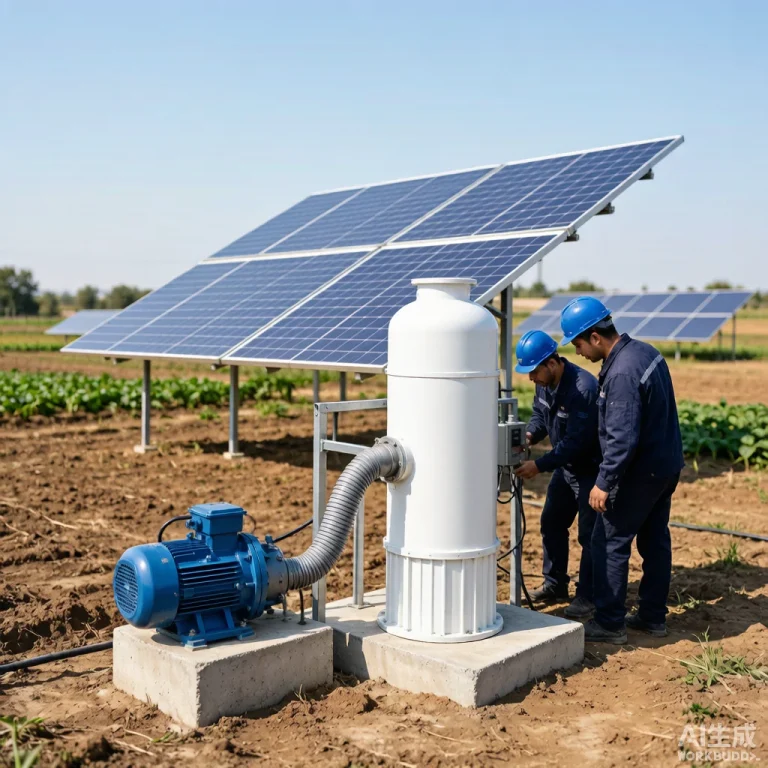
Flotation-Circuit Water Supply for Gold-Mine Solar Pumps in Senegal
Introduction
Flotation is where most of the gold actually leaves the ore, and it drinks a steady, clean stream of process water to do it. This article covers flotation-circuit water supply for gold-mine solar pumps, using Senegal’s goldfields—the Sabodala and eastern belts—as the worked example, written by the solar-pumping specialists at KINBO. A steady solar feed keeps the pump matched to the cell duty, the process twin of our controller work.
Table of Contents
Why Flotation Water Matters
- Feed the cells right—a steady flow from the pump keeps pulp density and recovery on target.
- Reuse process water—flotation runs on recovered water, so the controller must follow the recycle balance, not just the sun.
- Avoid surges—our efficiency-audit guide shows surges waste reagent and drop recovery.
- Protect the duty—our maintenance guide keeps the feed pump on line.
Senegal Goldfield Conditions
Senegal’s eastern gold belts run hot and dry, so every litre of process water is recycled and the flotation feed must be metered tightly. Our dust-and-heat guide and sizing guide frame the duties; here the prize is a pump that holds the cell feed instead of hunting with the clouds.
Sizing the Feed, Step-by-Step
- Read the cell duty—from the sizing, set the flotation water rate per tonne of ore.
- Buffer the surge—a small tank smooths solar swing before the pump lifts to the cells.
- Control the flow—the controller trims output to the duty, not the sun, via a transducer.
- Watch recovery—monitoring tracks flow against the plan, per our efficiency-audit guide.
- Spare it—stock a seal and impeller per our maintenance guide.
Steady vs Surging Feed
| Aspect | Steady feed | Surging feed |
|---|---|---|
| Recovery | On target | Drops |
| Reagent use | Metered | Wasted |
| Result | More gold out | Lost to tailings |
For the cost case, our TCO guide weighs control cost against recovered ounces.
Frequently Asked Questions
Why not just pump to the cells directly?
Solar output swings; a buffer and controller trim hold the feed steady so recovery stays up, per our efficiency-audit guide.
Does it use fresh water?
No—flotation runs on recycled process water, so the pump follows the plant’s water balance.
How do I confirm the feed is right?
Flow logging in monitoring shows the rate held against plan.
How do I start a Senegal flotation feed?
Share your Sabodala or eastern-belt cell duty and we size a buffered, controlled solar pump feed.
Related Articles
- DC/AC Controllers for Gold-Mine Solar Pumps
- Energy Efficiency Audits for Gold-Mine Solar Pumps
- Remote Monitoring for Gold-Mine Solar Pumps
- Explore KINBO Solar Pump Products
Feed Your Senegal Gold-Mine Flotation Circuit the Right Way
Tell KINBO your Sabodala or eastern-belt cell duty, and we will size a buffered, controlled solar pump feed that keeps recovery on target. Contact our team for a tailored quote.
Published by KINBO · October 19, 2026 · Category: Application Cases