Solar Pumps and Gender Equality: Empowering Women Farmers Through Clean Water Access
Introduction
KINBO supports gender-inclusive solar pump programs that recognize women as primary water managers in many agricultural communities.
Table of Contents
Gender-Differentiated Impact of Solar Pumps
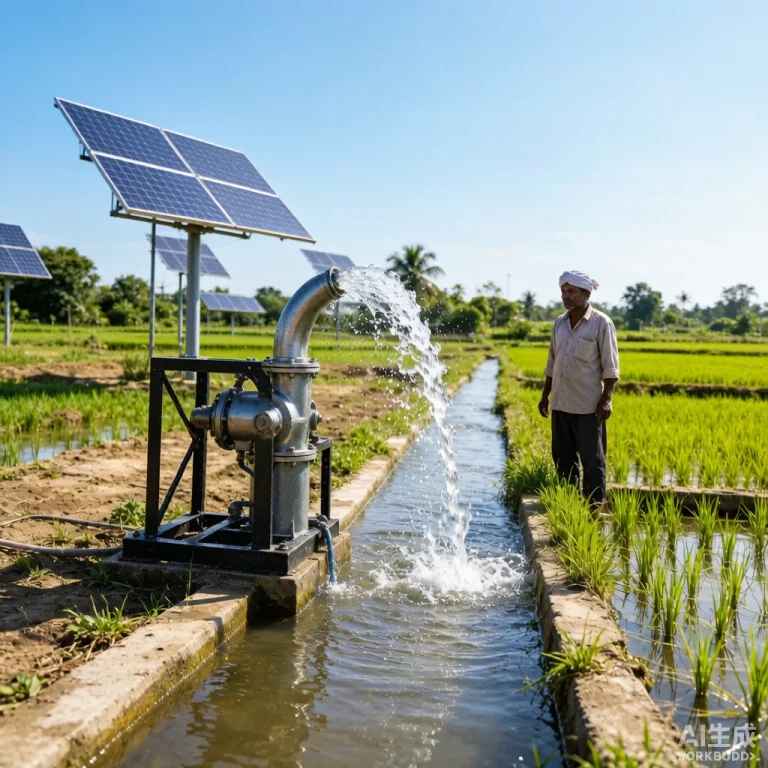
In many developing countries, women and girls spend 2-6 hours daily collecting water for domestic use and small-scale agriculture—time that could be spent on education, income-generating activities, or rest. Solar pumps with storage tanks eliminate water collection labor, freeing approximately 1,500 hours per year per household. This time dividend is consistently cited by women farmers as the most transformative benefit of solar water pumping.
Gender-Responsive Program Design
Solar pump programs achieve higher adoption and sustainability when designed with gender considerations. Key elements include: targeting women’s cooperatives and farmer groups rather than assuming male household heads are the primary decision-makers, providing financing products with flexible collateral requirements that don’t require land titles (which women often lack), and training women as solar pump technicians and maintenance providers. Programs in Nepal and Kenya that incorporated these elements achieved 40-60% women participation vs 15-25% in gender-blind programs.
| t | a | b | l | e | ||||||||||||
|---|---|---|---|---|---|---|---|---|---|---|---|---|---|---|---|---|
| I | m | p | a | c | t | A | r | e | a | |||||||
| B | e | f | o | r | e | S | o | l | a | r | P | u | m | p | ||
| A | f | t | e | r | S | o | l | a | r | P | u | m | p | |||
| A | n | n | u | a | l | B | e | n | e | f | i | t |
[[‘Water collection time’, ‘2-6 hours/day’, ‘0 hours/day’, ‘730-2,190 hours saved’], [‘Irrigated area (women-managed)’, ‘0.1-0.3 hectares’, ‘0.5-2.0 hectares’, ‘+300-500%’], [‘Vegetable sales income’, ‘$50-200/year’, ‘$500-2,000/year’, ‘+500-1,000%’], [‘Girls school attendance’, ’65-75%’, ’85-95%’, ‘+20 percentage points’]]
Frequently Asked Questions
Q: How do solar pumps specifically benefit women farmers?
A: Women are typically responsible for water collection and small-scale vegetable production. Solar pumps eliminate the labor of water fetching and enable expansion of vegetable gardens that women manage, directly increasing women’s independent income.
Q: What program design features increase women’s participation?
A: Flexible collateral requirements (group guarantees instead of land titles), women-only training sessions, female extension agents, and marketing materials featuring women farmers. Finance products with weekly or monthly payments aligned with vegetable harvest cycles rather than annual crop cycles.
Q: Is there evidence that solar pumps improve girls’ education?
A: Yes. When water becomes available at the homestead, girls who previously spent hours collecting water can attend school regularly. Studies in Ethiopia and Kenya document 15-25 percentage point increases in girls’ school attendance in communities with solar water pumping.
For development organizations and B2B programs with gender equality goals, contact KINBO for inclusive program support.
Related Articles
- Climate Resilience and Food Security
- Sub-Saharan Africa Market
- Explore KINBO Solar Submersible Pumps