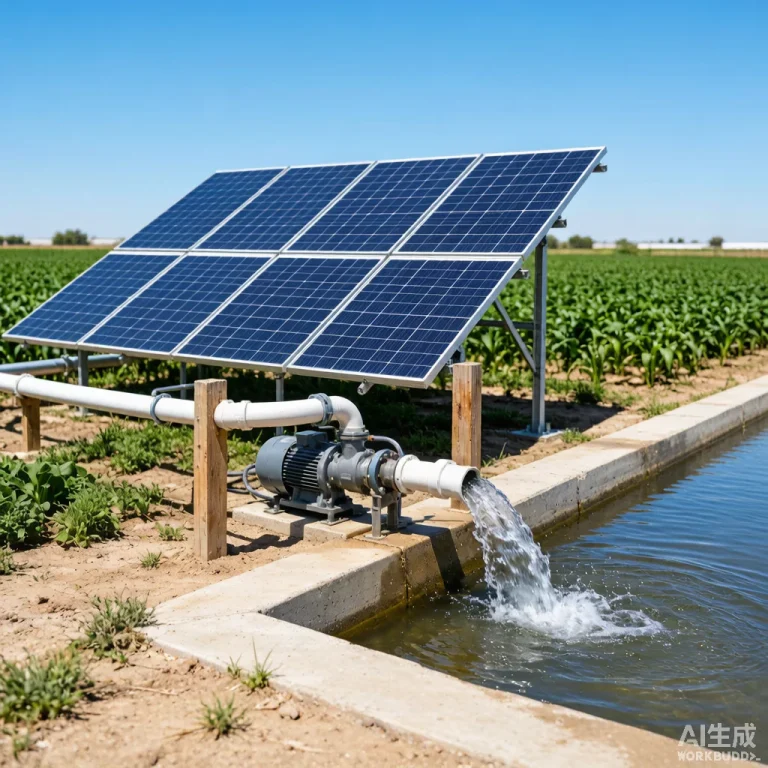
Solar Pump Systems for Gold Mining in Burkina Faso: Rugged Off-Grid Pumping in the Sahel
Introduction
Burkina Faso has become one of West Africa’s fastest-growing gold producers, with several large industrial mines and an enormous, fast-expanding artisanal sector. Almost all of it sits deep in the Sahel—far from the grid, far from fuel depots, and in a security environment that makes long fuel convoys risky. That combination makes self-powered, low-maintenance solar pumping especially strategic. This article examines solar pump systems for gold mining in Burkina Faso, written by specialists at KINBO.
Table of Contents
Gold Mining in Burkina Faso
- Industrial mines—established operations (Essakane, Mana, Youga, Houndé, Wahgnion) with continuous, plant-scale water duties.
- Artisanal boom—a huge informal sector pumps from pits and seasonal rivers, almost entirely off-grid.
- Sahel climate—extreme dry-season heat, heavy dust, and a short, intense rainy season to design around.
- Security reality—remote sites and fragile transport push operators toward self-sufficient, fuel-light systems.
Typical Water Duties
Burkinabè gold sites share the universal duties our dewatering guide, process-water guide and camp-supply guide cover: pit and adit dewatering, process and slurry transfer, camp and community water, and rehabilitation. The artisanal sector in particular needs rugged, portable solar pumps (our exploration and ASM guide).
A Burkina Faso-Suited Solar System
- Ruggedization first—IP65+ cabinets, dust-filtered ventilation and heat-rated electronics survive the Sahel year-round.
- Security-driven autonomy—large battery buffer and minimal fuel dependence keep sites running without risky convoys.
- Portable ASM kits—skid-mounted solar pumps that move with the pit, avoiding fixed diesel infrastructure.
- Hybrid reserve—for continuous process loads, a hybrid controller uses a small generator only as backup.
- Remote monitoring—our remote-operations guide keeps scattered Burkinabè sites visible from one dashboard.
Solar vs Diesel in Burkina Faso
| Factor | Diesel in Burkina Faso | Solar in Burkina Faso |
|---|---|---|
| Security of supply | Convoy risk | Self-sufficient on site |
| Dust/heat resilience | Overheats, clogs | Rated for Sahel |
| ASM suitability | Costly per unit | Portable, scalable kits |
| Best fit | Grid-connected plants | Remote / ASM / Sahel |
For the economics, our solar-vs-diesel analysis shows remote Burkinabè sites typically pay back in 1–3 years.
Frequently Asked Questions
Does the security situation make solar better?
Yes—by cutting fuel dependence, solar shrinks the need for risky convoys and keeps remote sites self-sufficient through disrupted logistics.
Can artisanal miners use solar?
Yes—portable, simple solar pump kits are ideal for pits and rivers where grid and diesel are impractical; rugged, low-maintenance designs suit non-specialist crews.
Will solar meet a large mine’s process load?
For continuous process duties, a hybrid solar-diesel system carries the bulk on sun and uses a small generator only as backup, cutting fuel 60–90%.
How do I start in Burkina Faso?
Define each duty (flow, head, water quality, hours), then we size the array, pump and buffer—our sizing methodology applies directly.
Related Articles
- Solar Pumps for Gold Mine Dewatering in Africa
- Solar Pumping for Gold Mine Exploration and Artisanal Mining
- Hybrid Solar-Diesel Pump Systems for Gold Mines
- Explore KINBO Solar Pump Products
Get a Burkina Faso Gold-Mine Solar Pump System
Tell KINBO your Burkina Faso site’s duties—industrial plant or artisanal, grid or deep off-grid—and we will specify a rugged, security-resilient solar (or hybrid) pump system sized to Sahel sun and season. Contact our team for a tailored quote.
Published by KINBO · September 23, 2026 · Category: Application Cases