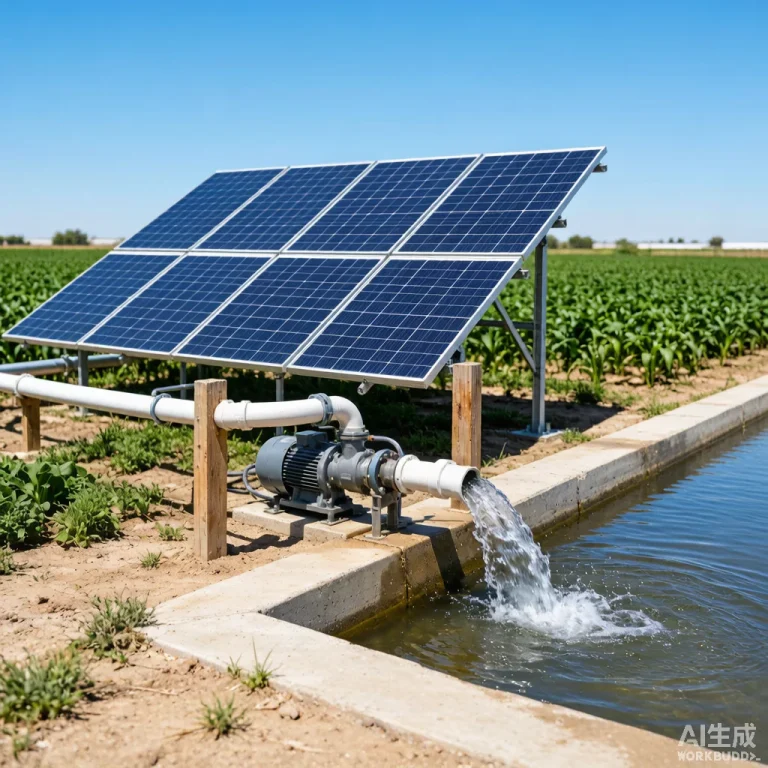
Operating and Maintaining Solar Pump Systems at Remote African Gold Mines
Introduction
The hardest part of any gold mine solar pump is not the installation—it is the thousandth day. Remote African sites are dusty, hot, vibration-prone and far from any service centre, so a system that looks right on paper can quietly degrade until it fails at the worst moment. Reliability is designed in, not added later: the right components, a simple maintenance rhythm, sensible spares and remote visibility so problems surface before they become outages. This article covers operating and maintaining solar pump systems at remote African gold mines, so a single pump can run a whole season unattended. Solar pumping specialists such as KINBO build field-serviceable packages with remote telemetry and on-site spares kits for exactly these conditions.
Table of Contents
The Remote Challenge
Three conditions define remote gold-mine reliability:
- Distance—a failed part means days, not hours, to repair; every avoidable trip costs production.
- Environment—fine red dust infiltrates enclosures; heat saps battery and electronics life; vibration loosens connections.
- Skill gap—the on-site team may be miners, not pump technicians; the system must be operable and diagnosable by non-specialists.
Preventative Maintenance Schedule
A simple rhythm beats heroic repairs. The table is a workable baseline for mineduty solar pumps.
| Frequency | Task |
|---|---|
| Daily (visual) | Check pump running, no leaks, panel clean of debris |
| Weekly | Clean panel face, inspect strainer, check tank level behaviour |
| Monthly | Tighten electrical connections, inspect cable for wildlife/abrasion |
| Seasonally | Replace wear parts (impeller/seals), test level control, verify array output |
Because mine water is abrasive, the seasonal wear-part swap is the single most valuable task—do it before failure, not after. The abrasion angle is covered in our abrasive water guide.
Dust, Heat and Vibration
- Dust—use IP65+ enclosures, sealed conduits, and keep the controller shaded; a dusty heatsink is a dead controller.
- Heat—oversize the array slightly so it is not straining at peak temperature; keep batteries (if any) out of direct sun.
- Vibration—mount the pump on a padded, rigid base; check and re-torque bolts monthly; use anti-vibration clamps on pipe.
Spares and Local Servicing
Design for the worst-case part delay:
- Spares kit on site—wear plates, seals, a spare wet-end or stator, fuses, a controller.
- Documented procedures—picture-led swap guides a non-technician can follow.
- Remote visibility—telemetry that flags low output, dry-run or fault before the site notices (see our remote monitoring guide).
- Local agent—pre-arrange a regional service contact for the rare job that needs a specialist.
A well-instrumented, spares-backed system turns a potential week-long outage into a same-day fix by the camp team.
Frequently Asked Questions
How often should wear parts be changed?
Seasonally for abrasive mine water, or sooner if telemetry shows output dropping. Replacing a wear plate on schedule costs little; running until failure can wreck the whole wet end.
Can the camp team service it without a technician?
Yes, if the system is built for it: tool-free access, a spares kit and picture-led guides. Reserve only the rare electrical fault for a specialist.
Does telemetry really reduce site visits?
Substantially. A pump that reports its own status means you send a trip only when something is actually wrong, and you arrive knowing the fault—not on a guessing mission.
What is the biggest avoidable failure?
A pump running dry or clogged because the strainer was never cleaned, or a controller killed by dust and heat. Both are prevented by the simple schedule above.
Related Articles
- Solar Pump Telemetry and Remote Monitoring
- Solar Pumps for Gold Mine Dewatering in Africa
- Explore KINBO Solar Pump Products
Get a Field-Serviceable Gold-Mine Solar System
Tell KINBO your site’s remoteness and duty, and we will specify a solar pump package with IP65 enclosures, a seasonal spares kit, picture-led service guides and telemetry—engineered so your camp team keeps it running between rare specialist visits. Contact our team for a tailored quote.
Published by KINBO · September 22, 2026 · Category: Industry Insights