AC vs DC Solar Water Pumps: How to Choose the Right Pump Type for Your Site, Climate and Budget
Introduction
Buyers comparing equipment quickly meet the choice between AC and DC solar water pumps. Both run from the sun, but they differ in how the power reaches the motor and where each one makes financial sense. This guide helps specify the right AC vs DC solar water pump for a given site. KINBO manufactures both topologies so the recommendation follows the site, not the catalog.
Table of Contents
How AC and DC Solar Pumps Work
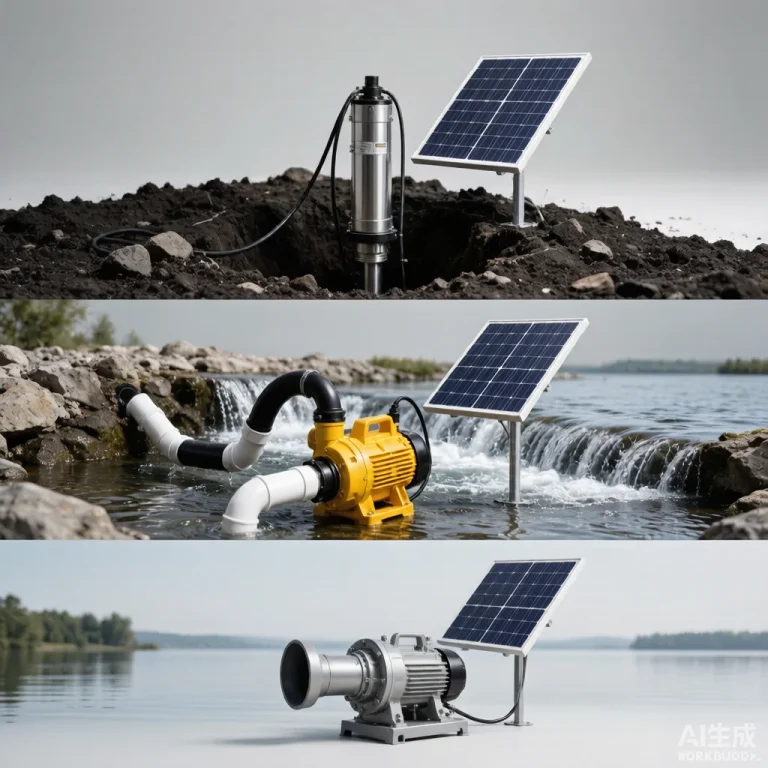
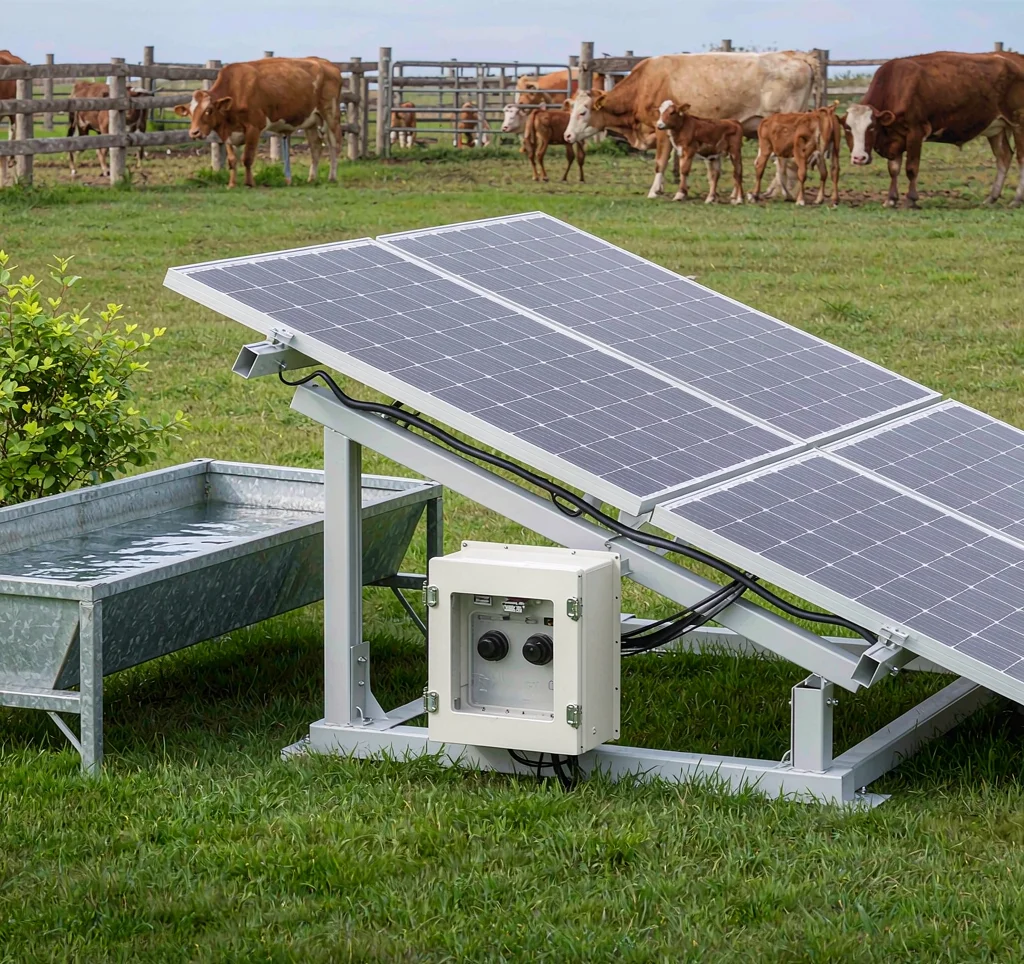
A DC solar pump is driven directly by the array through an MPPT controller that converts panel DC into motor-suitable DC, with no battery required. An AC solar pump instead feeds an inverter that produces three-phase AC for a standard induction motor. DC systems are simpler and slightly more efficient at the array-to-water path; AC systems reuse familiar, rugged motor designs and scale to higher power more easily.
Comparison at a Glance
| Factor | DC solar pump | AC solar pump |
|---|---|---|
| Efficiency (array to water) | Higher | Slightly lower |
| Typical power range | Up to ~5 kW | 5 kW and above |
| Battery need | None for daytime | None for daytime |
| Motor ruggedness | Good | Very good (industrial) |
| Best fit | Small-medium, cost-sensitive | Large, high-head, grid-tie hybrid |
Decision Factors by Site
- Head and flow: Low to medium duties favor DC; very high heads or large flows push toward AC.
- Budget: DC wins on simplicity and price for typical farm and village duties.
- Service ecosystem: Where three-phase AC motors are the local norm, spares are easier.
- Future hybrid: If grid or generator backup is planned, AC inverters integrate cleanly.
Climate and seasonality also matter. Sites with long, dull winters lean toward AC hybrids with battery or grid input, while sunny, daytime-only duties are perfectly served by a simpler DC or AC solar pump. The right answer is rarely always one or the other; it is the topology whose strengths match the duty cycle and the local service reality.
For the broader selection method, see our guide on how to choose a solar water pump before committing to a topology.
When to Choose Hybrid
Hybrid systems pair an AC pump with an inverter that accepts solar, battery, and grid or generator input. They suit sites that must run through cloudy stretches or at night, and where the higher upfront cost is justified by uninterrupted supply. For purely daytime, off-grid duties, a dedicated DC or AC solar pump without hybrid complexity is usually the leaner choice.
Frequently Asked Questions
Which is more efficient, AC or DC solar pump?
DC is marginally more efficient because it avoids the DC-to-AC inversion step, but the real-world gap is often small versus a good inverter.
Is DC only for small pumps?
Mostly. DC solar pumps dominate up to a few kilowatts; larger and high-head duties usually go AC.
Can an AC solar pump run without batteries?
Yes. Like DC, it runs directly from the array during daylight; batteries are only added for night or backup.
Which is easier to repair locally?
AC three-phase motors are familiar to most industrial electricians, while DC solar pump service needs controller-specific knowledge.
For B2B buyers specifying solar pumping systems for new projects, contact KINBO for competitive FOB pricing and technical specifications.
Related Articles
- Solar Pump Inverter Fault Codes and Troubleshooting
- Solar Water Pumps vs Diesel Pumps: 2026 Comparison
- Explore KINBO Solar Submersible Pumps