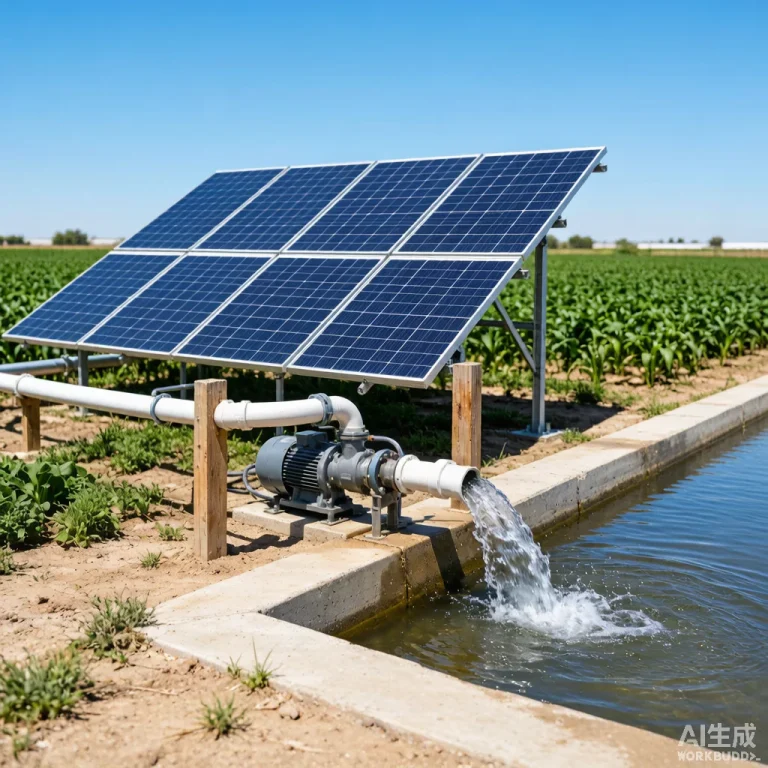
Solar Pump Systems for Gold Mining in Sierra Leone: Riverine and Community Pumping in a Post-Conflict Boom
Introduction
Sierra Leone is a post-conflict West African gold producer with a sizeable artisanal sector and a growing pipeline of exploration and junior projects, set in dense forest with weak infrastructure and a grid that does not reach the interior. As the sector rebuilds, reliable, self-powered water pumping is a practical foundation. Diesel is the default off-grid source, but solar pumping fits the climate and the remote, riverine locations. This article examines solar pump systems for gold mining in Sierra Leone, written by specialists at KINBO.
Table of Contents
Gold Mining in Sierra Leone
- Rebuilding sector—established operations plus a growing pipeline of exploration and junior projects.
- Forest & riverine ASM—a large informal workforce pumps from rivers and pits, almost entirely off-grid.
- Power reality—the grid is limited and unreliable; interior mines run on diesel or self-generation.
- Climate—a humid tropical pattern with a long wet season and a strong solar resource between rains.
Typical Water Duties
Sierra Leonean gold sites share the universal duties our dewatering guide, process-water guide and community-water guide cover: pit and adit dewatering, process and slurry transfer, camp and community water, and rehabilitation. Community supply is especially visible here given post-conflict development expectations.
A Sierra Leone-Suited Solar System
- Wet-season battery sizing—size the array to the weaker sun months with extra battery so pumping continues through heavy cloud.
- Humidity-rated, modular plant—ventilated, shaded enclosures; modular solar scales as the sector rebuilds.
- Portable ASM kits—skid-mounted solar pumps that move with the pit, avoiding fixed diesel infrastructure.
- Remote monitoring—our remote-operations guide keeps scattered forest sites visible from one dashboard.
Solar vs Diesel in Sierra Leone
| Factor | Diesel in Sierra Leone | Solar in Sierra Leone |
|---|---|---|
| Fuel logistics | Trucked to remote forest | Self-powered on site |
| Wet-season access | Refuel convoys stalled | No refuel needed |
| Community water | Running cost burden | Near-zero OPEX boreholes |
| Best fit | Coastal grid plants | Interior / forest / ASM |
For the economics, our solar-vs-diesel analysis shows remote Sierra Leonean sites typically pay back in 1–3 years.
Frequently Asked Questions
Does the long wet season kill solar output?
No—size the array to the weaker sun months with a larger battery; pumping continues through cloud and the wet season.
Can solar cover community water obligations?
Absolutely—solar boreholes supply local communities with almost no operating cost, supporting post-conflict development cleanly.
Will solar meet a large mine’s process load?
For continuous process duties, a hybrid solar-diesel system carries the bulk on sun and uses a small generator only as backup, cutting fuel 60–90%.
How do I start in Sierra Leone?
Define each duty (flow, head, water quality, hours), then we size the array, pump and buffer—our sizing methodology applies directly.
Related Articles
- Community Water Supply for Gold Mines with Solar Pumps
- Solar Pumps for Gold Mine Dewatering in Africa
- Hybrid Solar-Diesel Pump Systems for Gold Mines
- Explore KINBO Solar Pump Products
Get a Sierra Leone Gold-Mine Solar Pump System
Tell KINBO your Sierra Leonean site’s duties—rebuilding plant, junior exploration, or community borehole—and we will specify a humidity-rated, off-grid (or hybrid) solar pump system sized to local sun and season. Contact our team for a tailored quote.
Published by KINBO · September 28, 2026 · Category: Application Cases