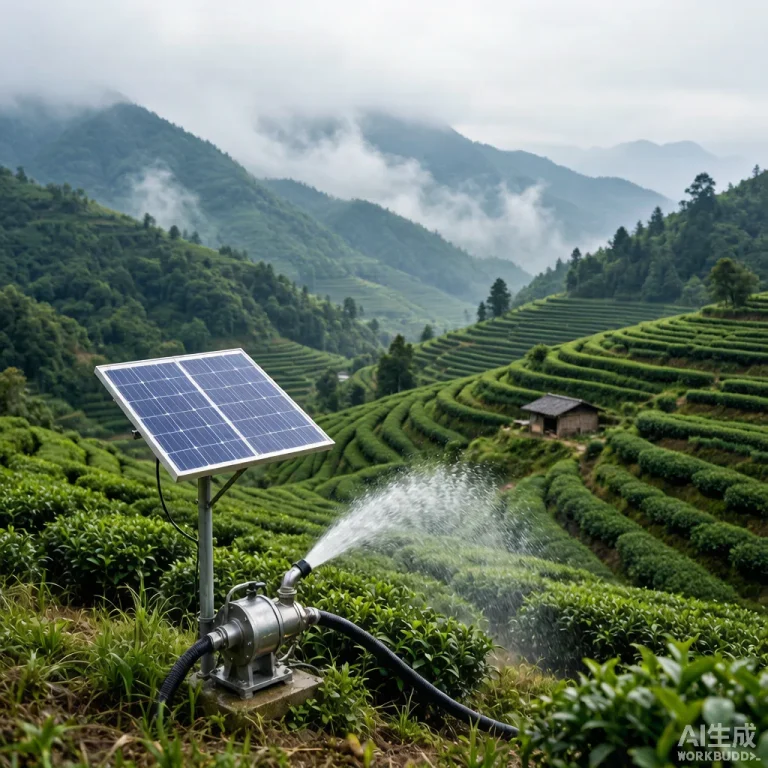
Deep Well Submersible Pumps and Floating Intakes for Solar Pumps in Gold Mines in Chad
Introduction
Where gold sits deep below the water table, the pump must reach down without drowning in sand or swinging on the surface. This article covers deep well submersible pumps and floating intakes for gold-mine solar pumps, using Chad’s goldfields—the Tibesti and southern alluvial districts—as the worked example, written by the solar-pumping specialists at KINBO. A correctly specced submersible and a stable floating intake let the pump draw clean, deep water on solar without frequent pulls. This is the groundwater companion to our intake guide.
Table of Contents
Why Deep-Well and Floating Intake Matter
- Reach the water—a submersible sits at the productive depth, not stranded above a falling table like a surface unit.
- Stay stable—a floating intake tracks the level and keeps off the silt that would sandblast the pump.
- Cope with swing—Chad’s deep, variable tables need a pump that rides the range, per the sizing.
- Protect the duty—clean, deep draw holds the sizing instead of stalling on a shallow, silty source.
Chad Site Conditions
Chad’s gold often lies under deep, sandy, level-swinging groundwater where a surface pump fails and a poorly placed submersible sands up. Our sizing guide, intake guide and storage-tank guide frame the duties; here the prize is a submersible that rides the table at Tibesti, so deep-well design earns its keep.
Deep-Well Design, Step-by-Step
- Log the bore—from the sizing, static and dynamic level, yield and sand content of the well.
- Spec the submersible—match head and flow to the productive zone, with sand-handling seals for Chad’s gritty water.
- Set the depth—place it below the lowest expected drawdown but above the well screen so it never runs dry or sucks silt.
- Add a float intake—for surface or shallow sources, a screened floating intake keeps suction off the bottom, per our intake guide.
- Protect the cable—clamp and shield the drop cable against abrasion and the cable-protection risks.
- Buffer and monitor—feed a tank and log level and runtime in monitoring.
Submersible vs Surface Pump
| Aspect | Submersible | Surface pump |
|---|---|---|
| Deep water | Reaches it | Stranded above |
| Prime | Always primed | Loses prime |
| Result | Reliable deep draw | Fails on deep tables |
For the cost view, our TCO guide shows a submersible pays back through avoided pulls and downtime.
Frequently Asked Questions
Why not just a surface pump?
On Chad’s deep, swinging tables a surface pump strands above the water or loses prime; a submersible rides the zone.
What does the floating intake do?
It keeps suction off the silty bottom on surface or shallow sources, protecting the pump, per our intake guide.
How do I avoid sand damaging the pump?
Set depth above the screen, size seals for grit and use a float intake, plus the intake screening.
How do I start a deep-well project in Chad?
Share your Tibesti or southern bore log and yield, and we specify a sand-handling submersible with a stable intake for your pump duty.
Related Articles
- Intake Trash Racks and Sedimentation for Solar Pumps
- Gold-Mine Solar Pump Sizing Guide
- Solar Pump Water Storage Tanks for Gold Mines
- Explore KINBO Solar Pump Products
Get a Deep-Well Solar Pump for Your Chad Gold Mine
Tell KINBO your Tibesti or southern bore log and yield, and we will specify a sand-handling submersible with a stable intake that draws clean, deep water on solar. Contact our team for a tailored quote.
Published by KINBO · October 3, 2026 · Category: Application Cases