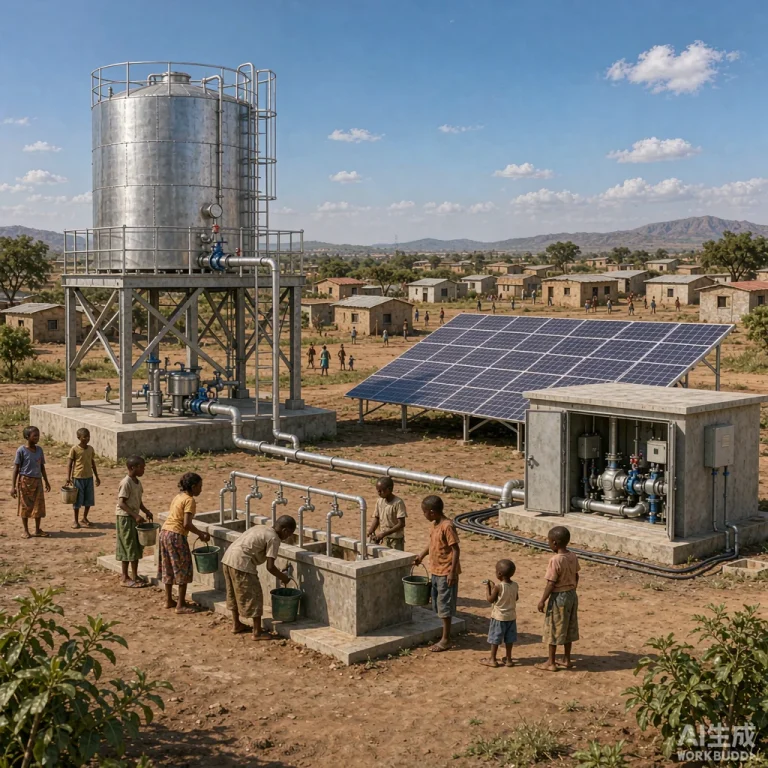
Cable Protection and Burial for Solar Pumps in Gold Mines in Nigeria
Introduction
The array and pump get the glory, but the cable between them is what thieves, rodents and the weather attack first. This article covers cable protection and burial for gold-mine solar pumps, using Nigeria’s goldfields—the Zamfara and southwestern greenstone prospects—as the worked example, written by the solar-pumping specialists at KINBO. Buried, conduited and tamper-aware cabling keeps the controller powered and the asset whole. This is the physical-layer companion to our lightning-protection guide.
Table of Contents
Why Cable Protection Matters
- Stop theft—buried, marked and locked cabling removes the easy copper target that strands the controller.
- Beat rodents and sun—conduit and UV-stable jacket stop gnawing and cracking that cause faults.
- Survive the weather—graded, drained routes keep joints dry, complementing our lightning-protection guide.
- Protect the duty—a live cable holds the sizing instead of losing the pump to a cut line.
Nigeria Site Conditions
Nigeria’s remote, access-challenged gold prospects face real cable theft and rodent pressure, where an exposed line is a guaranteed outage. Our lightning-protection guide, civil-works guide and grid-vs-offgrid guide frame the duties; here the prize is cabling that stays whole at Zamfara, so cable protection earns its keep.
Cable Protection Design, Step-by-Step
- Route it—from the sizing layout, pick the shortest, least-exposed path between array, controller and pump.
- Bury it—below the local dig depth in sand-bedded trench with warning tape, not just clipped to a fence.
- Conduit the runs—rigid or flexible conduit where it must surface, plus rodent-resistant jacket in the open.
- Lock the ends—sealed, tamper-aware junction boxes tied to monitoring for breach alarms.
- Grade and drain—keep joints above water, per our lightning-protection guide and civil-works guide.
- Label and map—record the route so future maintenance finds it without digging blind.
Buried vs Exposed Cable
| Aspect | Buried, conduited | Exposed |
|---|---|---|
| Theft | Hidden, locked | Easy target |
| Damage | Rodent and UV safe | Gnawed, cracked |
| Result | Live, whole | Frequent outage |
For the cost view, our TCO guide shows buried cabling beats the theft and fault losses it prevents.
Frequently Asked Questions
Does burial stop theft completely?
It removes the easy target and adds dig effort plus tamper alarms, so most opportunistic theft stops, though no method is absolute.
What about rodents and sun?
Conduit and UV-stable jacket on the surface runs stop gnawing and cracking that cause the faults.
Should the cable be in conduit everywhere?
Bury where possible; conduit and rodent-resistant jacket only where it must surface, per our civil-works guide.
How do I start a cable-protection project in Nigeria?
Share your Zamfara or southwestern layout, and we design buried, conduited, tamper-aware cabling that keeps your controller powered and whole.
Related Articles
- Lightning Protection and Flood Defense for Solar Pumps
- Civil Works and Site Mobilization for Solar Pumps
- Maintenance and Spare Parts for Gold-Mine Solar Pumps
- Explore KINBO Solar Pump Products
Get Cable Protection for Your Nigeria Gold-Mine Solar Pump
Tell KINBO your Zamfara or southwestern layout, and we will design buried, conduited, tamper-aware cabling that keeps your controller powered and whole. Contact our team for a tailored quote.
Published by KINBO · October 3, 2026 · Category: Application Cases