Solar Pump Inverter Sizing and Selection Guide
Introduction
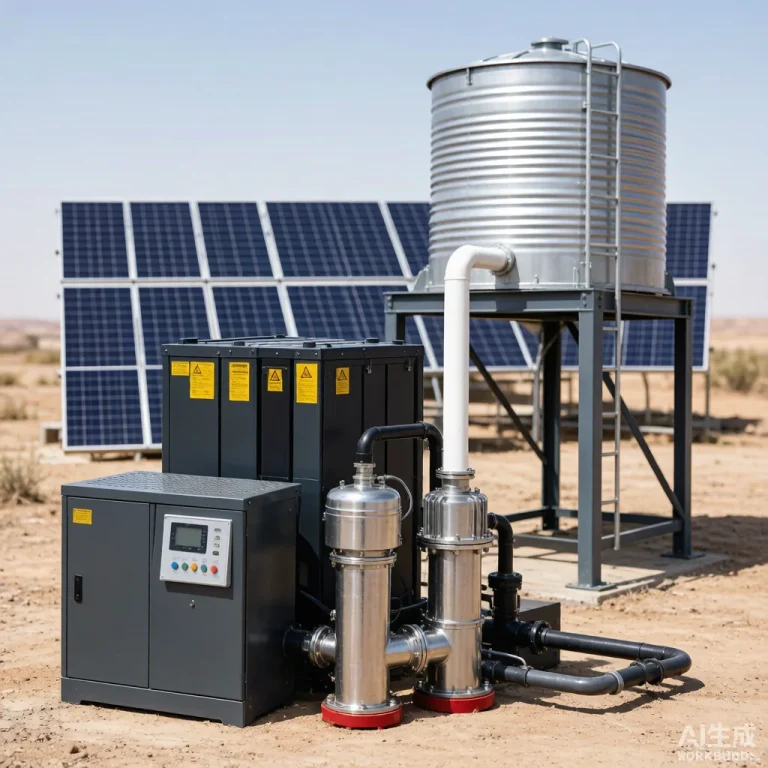
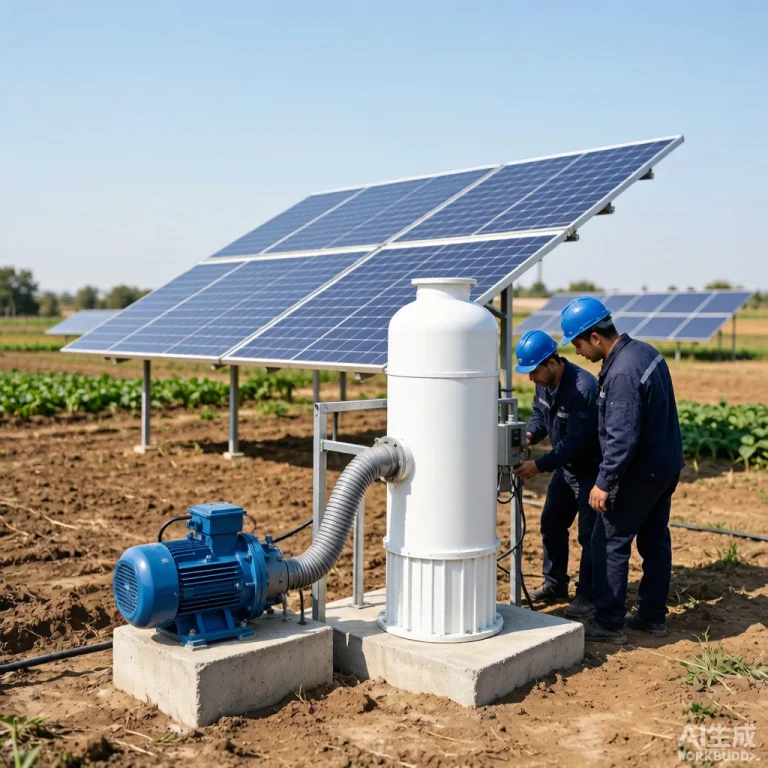
Solar pump inverters represent the bridge between DC photovoltaic power and AC pump motors—a critical component whose proper specification directly determines system efficiency, reliability, and total cost. While DC-direct solar pumps eliminate the inverter entirely, AC/DC hybrid systems and AC-coupled retrofits depend on inverters to convert variable solar DC power into the stable AC output that pump motors require. Selecting the right inverter involves navigating voltage windows, power ratings, environmental ratings, and compatibility considerations that can make the difference between a system that performs flawlessly for a decade and one that fails within months. KINBO solar pump systems include factory-matched inverters tested and optimized for each pump model.
Table of Contents
Inverter Types for Solar Pumping
Three inverter architectures serve solar pumping applications, each with distinct advantages. Solar-specific VFDs (Variable Frequency Drives) accept DC input directly from the solar array on a common DC bus, eliminating a separate DC-to-AC conversion stage. This integrated approach achieves 95-98% conversion efficiency and is the standard for new AC/DC hybrid pump installations. The DC bus design allows seamless blending of solar and grid/generator power without external transfer switches.
Standard VFDs with DC input option are industrial drives that accept both AC grid input and—in models with DC terminals—direct DC connection from the solar array. These are typically more rugged and feature-rich than solar-specific VFDs, offering advanced motor control features like sensorless vector control and automatic energy optimization. They are preferred for large pumping applications above 15 kW where the industrial drive’s robustness justifies the 2-3% efficiency penalty compared to solar-specific designs. Grid-tie solar inverters with AC coupling connect a standard grid-tie inverter to the AC side of a conventional pump VFD, enabling solar retrofits without replacing the existing pump controller. This approach is cost-effective for retrofitting existing AC pump installations but introduces additional conversion losses.
Sizing and Selection Criteria
Inverter sizing follows a simple rule with important nuance: the inverter’s rated output power must exceed the pump motor’s rated power by 15-25%. This margin accounts for motor service factor (typically 1.15 for continuous-duty pump motors), startup current surge, and the fact that the inverter will operate at elevated ambient temperatures where its effective power rating may be derated. For a 5 kW pump motor, specify a minimum 6 kW inverter; 7.5 kW provides additional headroom for future expansion or panel oversizing without replacing the inverter.
| Pump Motor Power | Minimum Inverter Rating | Recommended Inverter | DC Input Voltage Range |
|---|---|---|---|
| 0.75 kW (1 HP) | 1.1 kW | 1.5 kW | 90-400 VDC |
| 2.2 kW (3 HP) | 3.0 kW | 4.0 kW | 200-600 VDC |
| 5.5 kW (7.5 HP) | 7.5 kW | 7.5-11 kW | 300-800 VDC |
| 11 kW (15 HP) | 15 kW | 15-18.5 kW | 400-800 VDC |
Motor Compatibility and Drive Settings
The inverter must be compatible with the pump motor’s type and electrical characteristics. Permanent magnet synchronous motors (PMSM) require inverters with sensorless vector control capable of estimating rotor position from back-EMF measurements. Standard induction motors can use simpler V/f (voltage-to-frequency) control, though vector control improves low-speed torque and efficiency. When configuring the inverter, enter the motor’s nameplate data precisely: rated voltage, current, frequency, power factor, and rated speed. Deviations as small as 5% in the motor current setting can cause the inverter’s overload protection to trip prematurely or—worse—fail to protect the motor from sustained overcurrent.
A critical setting for solar pump applications is the minimum frequency (corresponding to minimum pump speed). Setting this too low causes the pump to operate below its minimum stable speed, resulting in vibration, low efficiency, and potential bearing damage. For centrifugal pumps, the minimum frequency should be 25-30 Hz (approximately 50% of rated speed). For positive displacement pumps, 15-20 Hz is acceptable due to their flatter torque-speed characteristic. See our motor types comparison guide for detailed motor-inverter compatibility matrix.
Installation and Environmental Protection
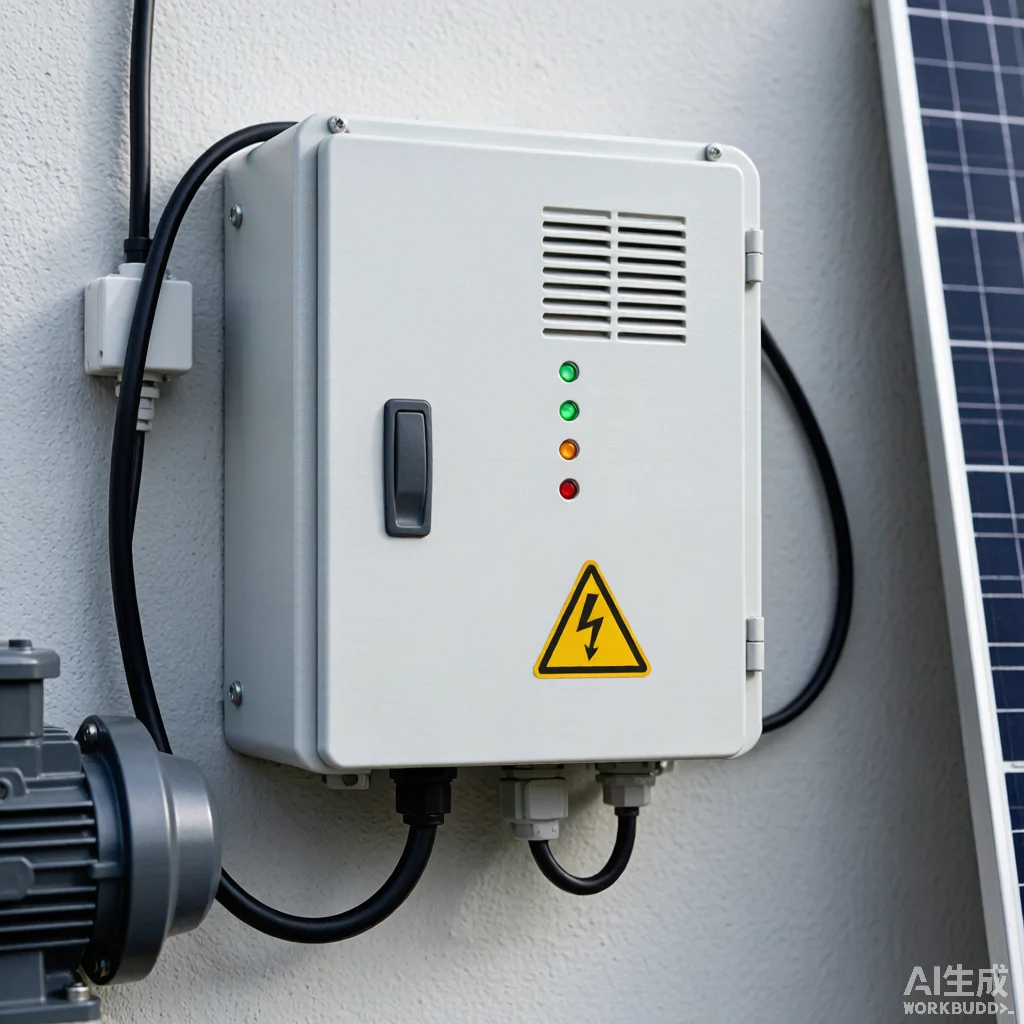
Inverter enclosures must balance three competing requirements: weather protection, ventilation, and accessibility. The inverter dissipates 3-5% of rated power as heat, so a 7.5 kW inverter generates approximately 300W of heat at full load—equivalent to three 100W incandescent bulbs. In an unventilated enclosure, this heat raises internal temperature by 20-30°C above ambient, potentially triggering thermal protection shutdown or accelerating component aging. Install inverters in IP65-rated enclosures with filtered ventilation—passive convection through louvers for units below 5 kW, forced-air cooling with thermostatically controlled fans for larger units. The enclosure should be mounted on a north-facing wall (south-facing in Southern Hemisphere) to minimize solar heat gain, with at least 100mm clearance on all sides for air circulation.
Frequently Asked Questions
Q: Can I use a standard solar inverter (for grid-tie) with a water pump?
A: Generally no. Grid-tie inverters are designed to synchronize with the utility grid’s stable voltage and frequency. They cannot operate standalone without a grid reference. Solar pump inverters are specifically designed for standalone (off-grid) motor drive applications with wide DC input windows and motor control algorithms.
Q: What is the typical lifespan of a solar pump inverter?
A: 8-12 years for quality units with proper ventilation and surge protection. The primary aging components are electrolytic capacitors in the DC bus, which have a rated life of 5,000-10,000 hours at rated temperature. Operating the inverter 10°C below its maximum rated temperature doubles capacitor life.
Q: How do I protect the inverter from voltage surges?
A: Install Type 2 surge protection devices on both the DC input and AC output sides. For lightning-prone areas, add Type 1 SPDs at the array combiner box. The total protection investment of $150-350 protects an inverter costing $800-3,000—approximately 15% of replacement cost for a 50-80% reduction in surge-related failure risk.
For B2B engineers specifying solar pump inverters, contact KINBO for factory-matched inverter-pump packages with optimized drive settings and competitive FOB pricing.
Related Articles
- Solar Pump Motor Types Comparison
- DC vs AC/DC Solar Submersible Pumps
- Explore KINBO Solar Pump Inverters