Solar Pumps for Swimming Pool Filling and Circulation: Off-Grid Pool Water Management
Introduction
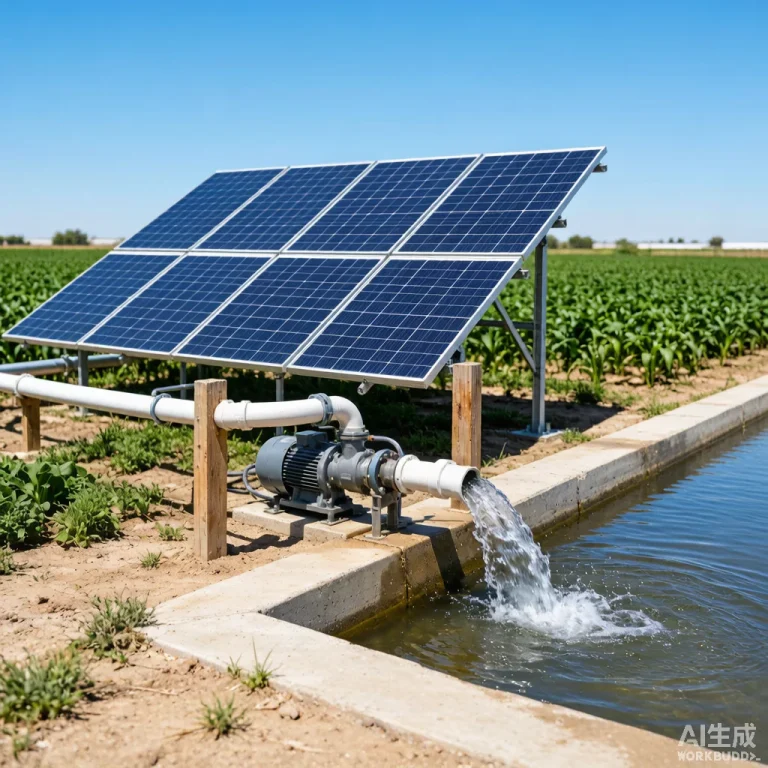
A swimming pool is a surprisingly good fit for solar pumping. Filling a new pool, topping it up after backwashing, or running the circulation and filtration loop all happen in daylight—exactly when a solar pump produces. For off-grid homes, remote cabanas, camps and eco-resorts, a solar pump can handle pool filling and circulation with no grid connection and no running cost, and because pool duty is forgiving (the pool is a giant buffer), a modest array keeps the water moving through the filter. The design focus is clean, corrosion-resistant circulation at modest pressure, not high head. This article covers how to specify a solar pump for pool filling and circulation. Solar pumping suppliers such as KINBO provide corrosion-resistant, low-pressure packages suited to chlorinated or salt pool water and continuous filtration duty.
Table of Contents
Filling a Pool from a Source
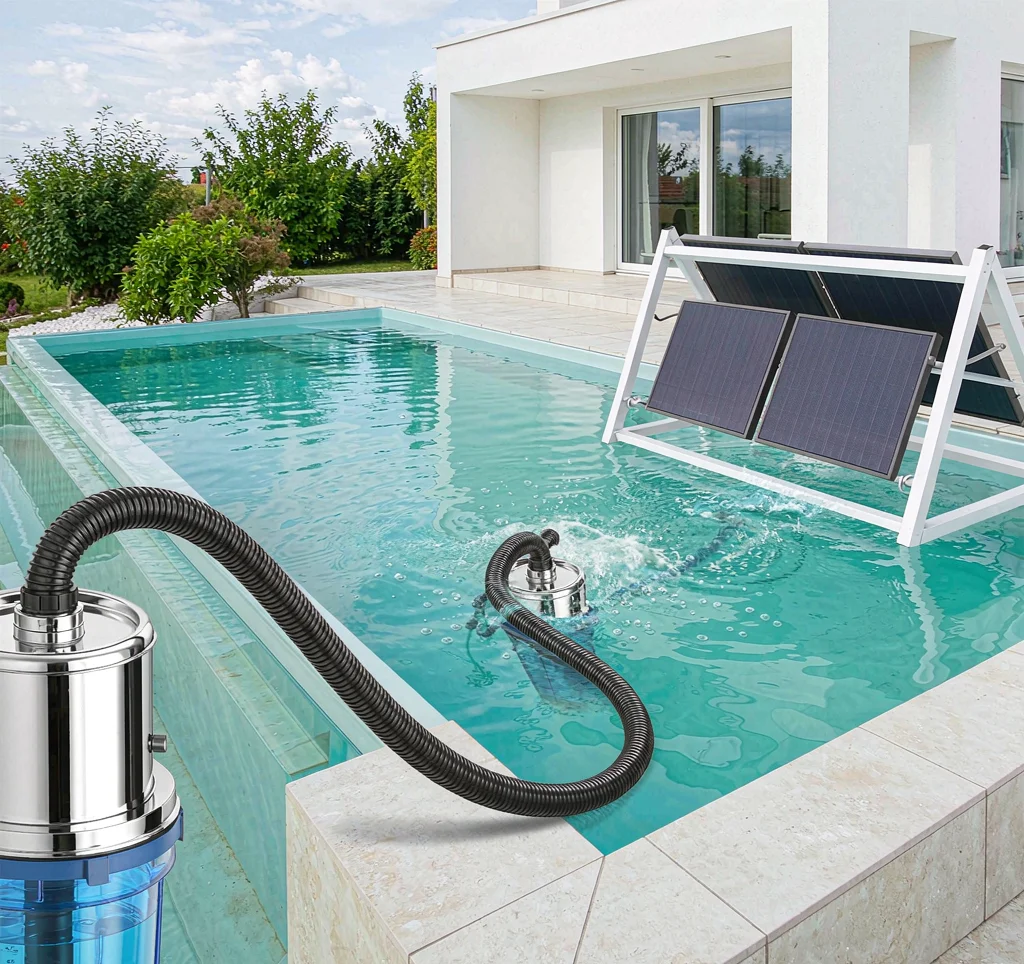
Filling a pool is a bulk-transfer job like tank filling, but the volumes are large and the source is often a well, tank or distant supply. The table gives planning figures.
| Pool Volume | At 2 m³/h | At 5 m³/h |
|---|---|---|
| 30 m³ (small) | ~15 h | ~6 h |
| 50 m³ (medium) | ~25 h | ~10 h |
| 100 m³ (large) | ~50 h | ~20 h |
A one-off fill can run over several sunny days—fine for a pool, since nobody needs it full by tonight. Size the pump to a comfortable multi-day fill, or faster if you have the array.
Circulation and Filtration Duty
Once full, the pool needs continuous circulation through the filter to stay clear. Typical targets:
- Turnover—aim to pass the full volume through the filter every 4–8 hours in peak season.
- Pressure—pool pumps run low pressure (1–2 bar) but need steady flow against filter back-pressure that rises as the media loads.
- Skimmer + main drain—draw from both so surface and bottom debris move to the filter.
- Filter type—sand, cartridge or DE each sets a different back-pressure curve; size the pump to the high end.
A solar circulation pump runs through the day and idles at night; for pools that must circulate overnight, add battery storage or accept a daytime-only cycle (usually adequate for clarity in cool periods).
Materials and Corrosion
Pool water is corrosive—chlorine or salt attacks standard metals. Choose accordingly:
| Component | Recommended Material |
|---|---|
| Pump wet end | Stainless, reinforced plastic or marine-grade |
| Seals | Chemical-resistant (EPDM / FKM) |
| Pipe / fittings | PVC or HDPE rated for pool duty |
Rinse the pump with fresh water if it sits idle with chlorinated water trapped inside, to extend seal life.
Solar Hours and Buffer
Because the pool is itself a huge buffer, solar-hour variation matters less than for a tap-supplied system. Still:
- Filling—spread over several days; no storage tank needed, the pool is the tank.
- Circulation—daytime-only is acceptable for most climates; size the array to turn the volume over within the sun’s hours.
- Top-up after backwash—backwashing dumps water; a small solar top-up pump restores level without hauling a hose.
For other off-grid water-handling duties, our floating intake guide covers drawing from a pond or tank source.
Frequently Asked Questions
Will a solar pump keep the pool filtered overnight?
Only with battery storage or a grid/genset hybrid. A direct solar pump circulates by day and idles at night—adequate for clarity in cool seasons, less so in hot, high-algae periods when you may want overnight run.
Can the same pump fill and circulate?
Often, if sized for the higher of the two flows (circulation against filter back-pressure usually wins). Use a valved manifold so you can direct flow to fill or to the filter as needed.
Is a standard pond pump okay for a pool?
Not ideally. Pool water’s chlorine/salt demands corrosion-resistant materials and a design that handles filter back-pressure. A standard ornamental pump may corrode or lack the pressure for filtration.
How big a solar array for pool circulation?
Match it to the pump’s watt draw times the hours you want to circulate, plus headroom. A small to medium pool’s filtration pump is typically a few hundred watts, so a single panel or two usually covers daytime circulation.
Related Articles
- Solar Pumps for Floating Intake from Lakes and Reservoirs
- Solar Pump Selection for Tank Filling and Bulk Transfer
- Explore KINBO Solar Pump Products
Get a Solar Pool Pump Package
Share your pool volume, fill source and whether you need circulation too with KINBO, and we will specify a corrosion-resistant solar pump and array—for fill, filtration, or both—with the right materials for chlorinated or salt water. Contact our team for a tailored quote.
Published by KINBO · September 21, 2026 · Category: Application Cases