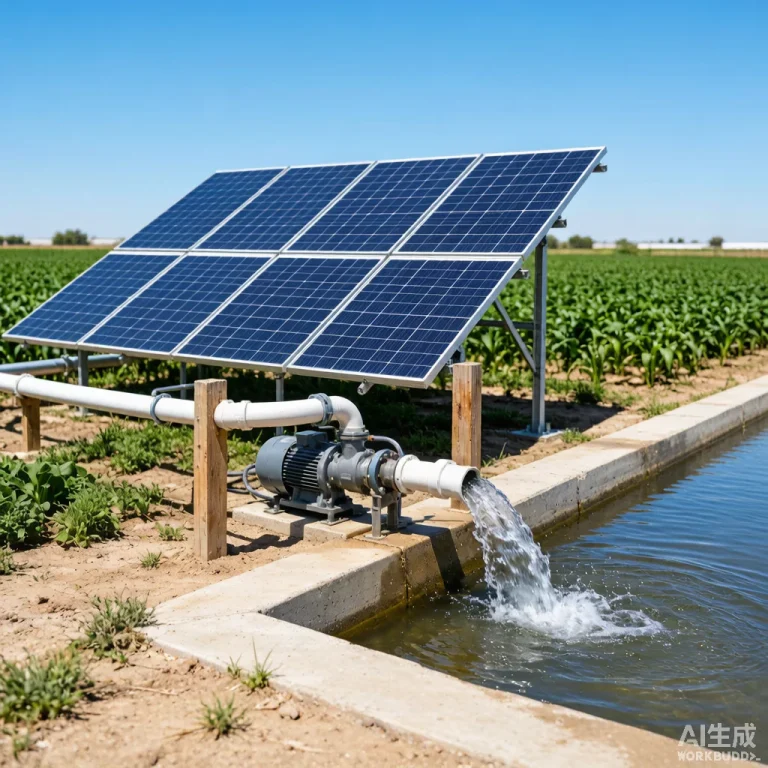
Solar Water Pumps for African Sugarcane Estates: Reliable Irrigation Supply and Industry Outlook
Introduction
Sugarcane is a water-hungry crop whose sugar accumulation depends on steady moisture through the long growing season, yet many African estates sit beyond reliable grid power. Solar water pumps for African sugarcane estates now deliver supplemental irrigation and processing water without diesel or outage risk. KINBO equipment supports the high midday flow cane demands. This article looks at estate water needs, system design, and the market shift toward solar irrigation in the sugar sector.
Table of Contents
Sugarcane Water Needs
Cane transpires heavily and needs consistent soil moisture, especially during grand growth when tonnage is set. A missed irrigation in a dry spell permanently caps yield, so supply must be dependable.
Solar pumping aligns with this: the hottest, brightest part of the day is when cane loses most water, so generation and demand peak together.
Irrigation Applications
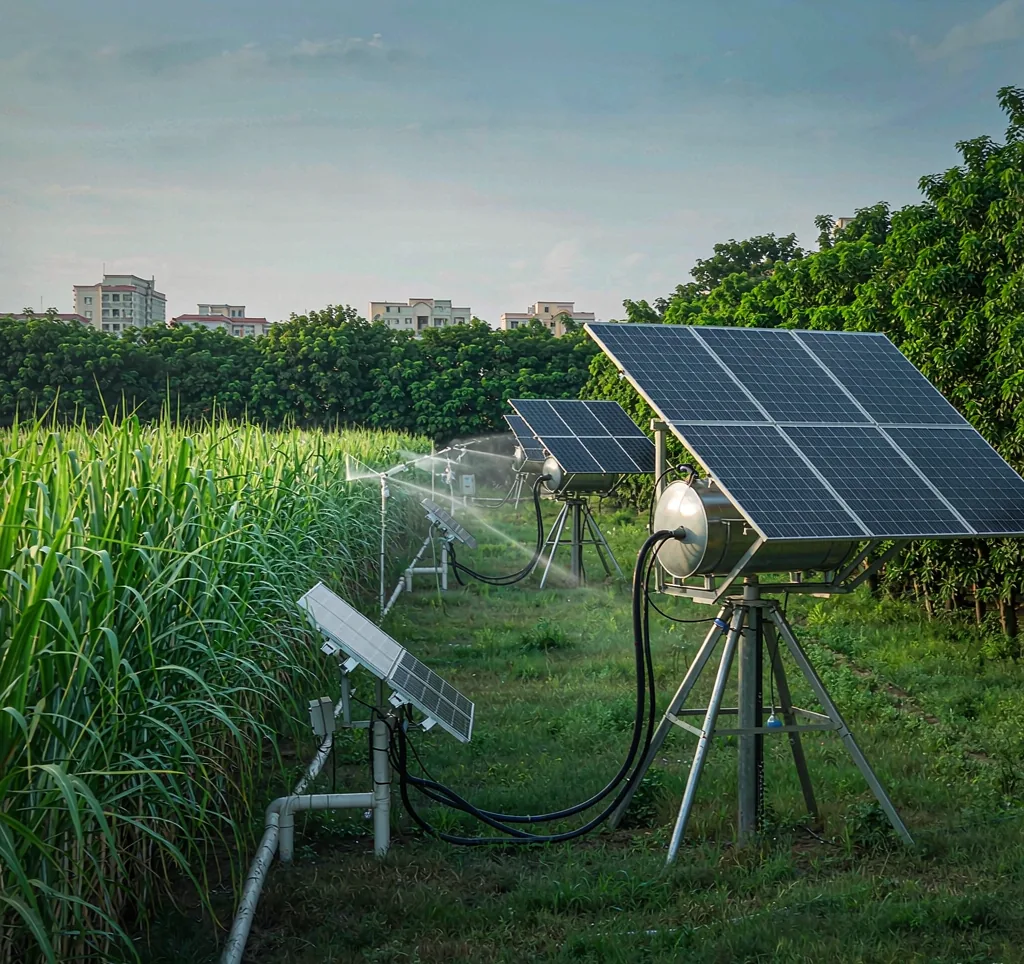
Estates use center pivots, rain guns or furrow supply, all of which run on a solar surface pump with adequate pressure. Processing also draws water for washing and milling.
| Option | Solar Surface | Diesel Surface |
|---|---|---|
| Running cost | Low | High |
| Pressure stability | Good | Good |
| Emissions | None | CO2 |
| Fuel risk | None | Supply risk |
System Design for Estates
An estate system usually draws from a river or borehole with a submersible pump into a canal or tank, then a surface pump distributes through the block. Filtration protects emitters from clogging.
- Submersible source pump to the header tank.
- Surface distribution pump with controller.
- Filtration before emitters.
- Pressure regulator for even rows.
A crop water demand reference helps set the right litres per hectare per day for cane.
Sizing and Economics
Sizing uses estate area, crop coefficient, and reference evapotranspiration to estimate daily volume, then converts to flow and head. Cane’s long season rewards a slightly oversized array.
- Area and row spacing.
- Crop water need per day.
- Total dynamic head.
- Pump and PV with margin.
- Tank or canal to smooth peaks.
Market and Sustainability Outlook
Sugar buyers and mills increasingly specify lower-carbon production, so solar irrigation is becoming a market-access requirement, not just a cost saver. Estates that adopt it early secure both yield stability and preferred-supplier status.
As panel costs keep falling, even mid-size cane farms can justify the investment on water-security grounds alone. The advantages of solar irrigation compound across a multi-year crop cycle.
Frequently Asked Questions
Which irrigation suits African sugarcane?
Center pivots, rain guns and furrow supply all work; the choice depends on terrain, with a solar surface pump providing the pressure for each.
Can solar pumps run sugarcane irrigation reliably?
Yes. A solar surface pump with a controller delivers the steady pressure cane needs, peaking with the midday demand the crop experiences.
How many panels for a 10 ha cane block?
A 10 ha cane block typically needs around 8-12 kW of PV for supplemental irrigation, adjusted for climate and crop coefficient.
Is solar irrigation worth it for sugarcane estates?
For estates the payback is strong: removing diesel protects margins across a long season and stabilizes the yield that mills reward.
For B2B buyers sugarcane estate solar pumping, contact KINBO for competitive FOB pricing and technical specifications.
Related Articles
- Solar Water Pumps for African Coffee and Tea Plantations: Irrigation and Processing Applications
- Solar Water Pumps for African Fruit Orchards and Commercial Crop Estates: Reliable Irrigation Supply
- Explore KINBO Solar Surface Pumps