How to Size a Solar Water Pump for Deep Borewells: Head, Flow and Array Math for Reliable Yield
Introduction
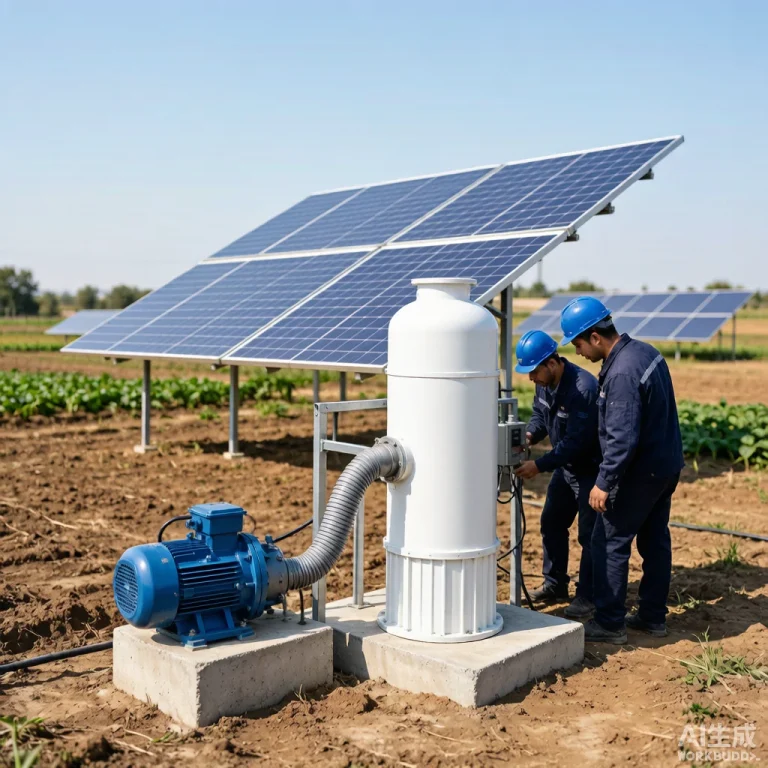
Deep borewells punish guesswork. Too little pump and you never reach the water; too little array and the pump starts but delivers nothing useful. Sizing a solar water pump for deep borewells is a matter of matching head, flow, and sun into one coherent system. KINBO submersible drives are built for exactly these high-head, low-yield duties.
Table of Contents
Understanding Total Head in a Deep Well
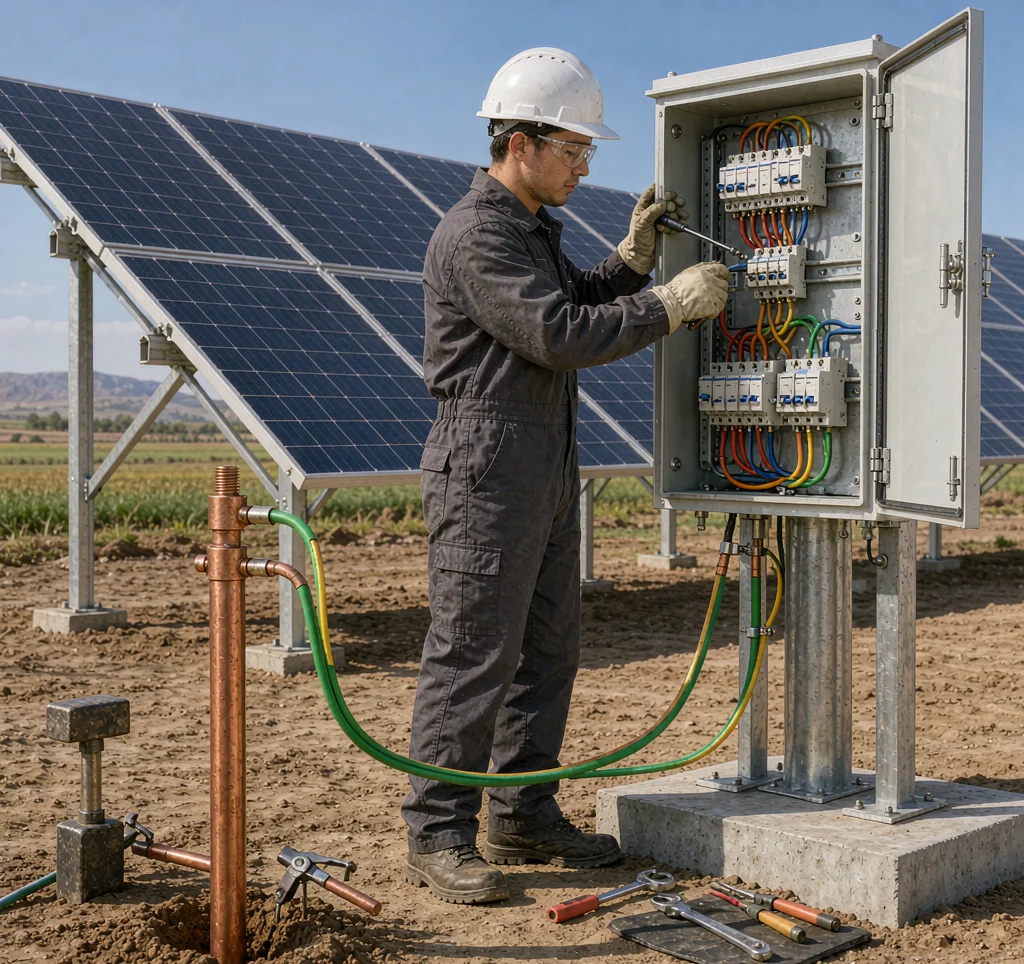
The pump does not fight the depth alone; it fights total dynamic head, which is the static water level plus drawdown under pumping, plus pipe friction and any discharge height to the tank. A 60 m static well that drops another 10 m while running, pushing water 5 m up to a tank through 80 m of pipe, may present well over 80 m of effective head. Underestimating head is the most common cause of a pump that “runs but does not deliver.”
Matching Flow to Daily Need
Flow and head trade against each other: a given motor delivers more flow at less head and less flow at more head. Start from the daily volume you actually need, then back-calculate the required flow rate for the hours of good sun. A farm needing 20 m3 per day with about 6 effective sun-hours targets roughly 3.3 m3/h, but build in margin for weaker winter sun.
| Input | Why it matters |
|---|---|
| Static + drawdown level | Sets the minimum pressure the pump must overcome |
| Required daily volume | Sets flow rate for the available sun hours |
| Pipe diameter and length | Drives friction losses that quietly steal head |
| Discharge height | Adds fixed head to the tank or point of use |
Sizing the Solar Array
The array must supply the pump’s running watts with margin for hot-panel voltage drop and cloudy mornings. A practical rule is to size the array about 20 to 30 percent above the pump’s nameplate input, then confirm the open-circuit voltage sits inside the controller window even on the coldest bright morning. For the panel math, see our guide on how to configure solar panels for water pumps.
Resist the temptation to undersize the array “to save money.” A starved pump cycles, overheats, and wears faster than a correctly fed one, and the apparent saving disappears in early service calls.
Field Checks Before You Commit
- Measure the static level and perform a drawdown test at the target flow.
- Confirm the borewell diameter and any existing casing before choosing pump size.
- Size pipe generously; friction loss grows fast with small diameters.
- Choose a controller with dry-run protection so a dropping source cannot destroy the pump.
When the numbers are respected, a deep-well solar pump runs for years with little more than panel washing and the occasional check, which is exactly the outcome remote sites need.
Frequently Asked Questions
What is the most overlooked factor in borewell sizing?
Drawdown. The pump sees the water level while running, which can be far below the static level and silently adds head.
Can one array size fit summer and winter?
Size for the weaker winter sun with margin; summer simply over-delivers, which a tank absorbs.
Why does pipe diameter matter so much?
Small pipe multiplies friction loss, raising effective head and cutting delivered flow more than most expect.
Is dry-run protection essential for wells?
Yes. A dropping source is common; dry-run protection stops the pump before cavitation and seal damage occur.
For B2B buyers sizing solar pumping systems for deep wells, contact KINBO for competitive FOB pricing and technical specifications.
Related Articles
- Solar Pump Battery Backup vs Direct Solar
- Solar Water Pump Market in Africa 2026
- Explore KINBO Solar Submersible Pumps