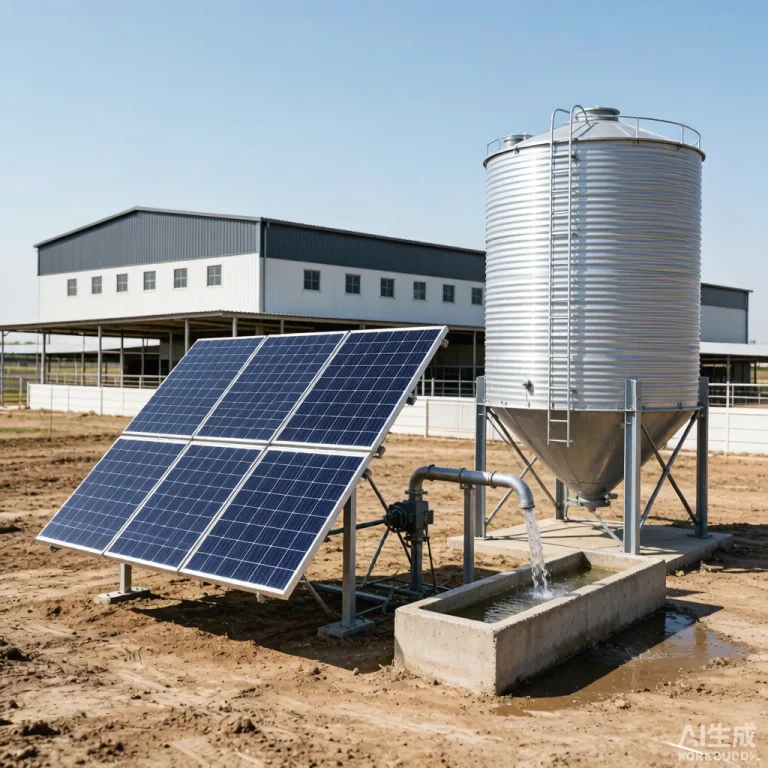
Solar Pump Systems for Gold Mining in Guinea-Bissau: Small-Scale Riverine Pumping
Introduction
Guinea-Bissau’s gold presence is small and almost entirely artisanal, concentrated along the river systems and the eastern fringe near the border with Guinea and Senegal, in a low-lying, humid country with weak infrastructure and no meaningful mining grid. Diesel is scarce and imported, so solar pumping offers a clean, fuel-free path for the few water duties these sites face. This article examines solar pump systems for gold mining in Guinea-Bissau, written by specialists at KINBO.
Table of Contents
Gold Mining in Guinea-Bissau
- Riverine ASM—small-scale, manual gold recovery along rivers and tributaries, often seasonal and mobile.
- Eastern fringe—activity clusters near the Guinea and Senegal borders, far from any urban services.
- Power reality—no mining grid exists; any power comes from diesel cans or small generators brought in over poor roads.
- Climate—a tropical, humid pattern with a long wet season and a dry season of reliable sun.
Typical Water Duties
Guinea-Bissau gold sites share the universal duties our dewatering guide, process-water guide and community-water guide cover, scaled to tiny operations: shallow pit dewatering, sluice and washing water, camp supply, and basic rehabilitation. Community water is the dominant need given sparse rural supply.
A Guinea-Bissau-Suited Solar System
- Ultra-portable kits—lightweight, skid-mounted solar pumps that move with the pit and need no fuel or grid.
- Dry-season array sizing—size to the dry-season sun for maximum output, modest battery for the wet season.
- Low-skill, robust build—systems made for humid, unsupervised sites with minimal spare parts.
- Remote monitoring—our remote-operations guide lets a supervisor track scattered sites from a distance.
Solar vs Diesel in Guinea-Bissau
| Factor | Diesel in Guinea-Bissau | Solar in Guinea-Bissau |
|---|---|---|
| Fuel availability | Scarce, imported | Self-powered on site |
| Running cost | High, volatile | Near-zero OPEX |
| Site mobility | Fixed tanks/cans | Portable skids |
| Best fit | None practical | All off-grid ASM |
For the economics, our solar-vs-diesel analysis shows fuel-scarce settings like Guinea-Bissau reach payback fastest, often under 2 years.
Frequently Asked Questions
Can solar work for such small sites?
Yes—scaled, portable solar kits suit shallow-pit ASM exactly, removing the diesel supply problem that limits output.
Is the system movable for shifting rivers?
Absolutely—skid-mounted solar pumps relocate with the pit, letting operators follow the ore without fixed infrastructure.
Will solar meet a larger site’s process load?
For continuous process duties, a hybrid solar-diesel system carries the bulk on sun and uses a small generator only as backup, cutting fuel 60–90%.
How do I start in Guinea-Bissau?
Define each duty (flow, head, water quality, hours), then we size the array, pump and buffer—our sizing methodology applies directly.
Related Articles
- Community Water Supply for Gold Mines with Solar Pumps
- Solar Pumps for Gold Mine Dewatering in Africa
- Hybrid Solar-Diesel Pump Systems for Gold Mines
- Explore KINBO Solar Pump Products
Get a Guinea-Bissau Gold-Mine Solar Pump System
Tell KINBO your Guinea-Bissau site’s duties—riverine pit, ASM camp, or community borehole—and we will specify a fully off-grid, portable solar pump system built for small, fuel-scarce operations. Contact our team for a tailored quote.
Published by KINBO · September 29, 2026 · Category: Application Cases