Solar Pump Selection for Market Garden and Horticulture Irrigation: Flow, Pressure and Storage Design
Introduction
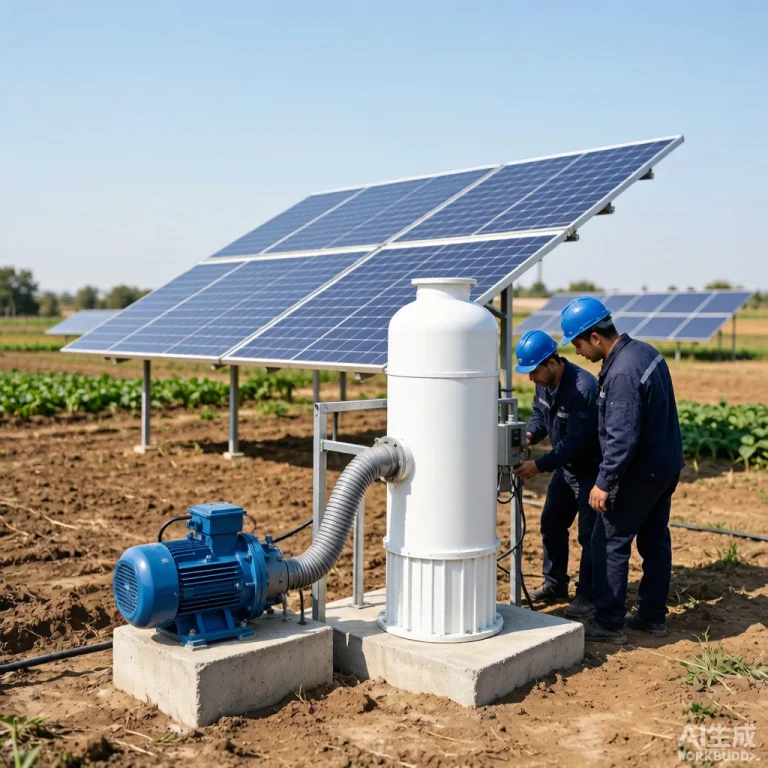
Market gardens and horticulture operations grow high-value crops on small plots—and those crops are unforgiving about water. Vegetables, herbs, fruit and nursery stock need steady, frequent irrigation, often through drip lines that demand consistent pressure. A solar pump that works for a maize field may starve a drip system. Selecting a solar pump for market garden and horticulture irrigation means matching flow and pressure to the drip or sprinkler layout, sizing storage for daily peaks, and keeping filtration clean. This guide covers the selection decisions that make high-value crop irrigation reliable off-grid. Manufacturers such as KINBO build solar surface and submersible pump packages designed for drip and micro-irrigation pressure requirements.
Table of Contents
Why Horticulture Differs from Field Crops
Field crops tolerate wide swings in soil moisture; horticultural crops do not. Vegetables and fruit are shallow-rooted, sensitive to water stress and grown for market quality, so irrigation must be frequent and even. That shifts the design priorities:
- Higher frequency, smaller volumes—daily or every-other-day cycles rather than weekly flooding.
- Pressure consistency—drip emitters need stable pressure to deliver uniform water along the row.
- Filtration—fine emitters clog easily, so strainers and filters are mandatory.
- Harvest-timed reliability—missing water near harvest can cost the crop’s market value.
That is why a design sized for bulk volume alone often disappoints a horticulture grower; for the underlying numbers see our guide on calculating required head.
Pump Selection: Flow, Head and Pressure
Start from the emitters, not the source. The table shows how crop type shifts the target duty point.
| Irrigation Method | Typical Pressure | Pump Focus |
|---|---|---|
| Drip / trickle | 1–2 bar | Steady pressure, fine filtration |
| Micro-sprinkler | 1.5–3 bar | Medium head, even coverage |
| Overhead sprinkler | 2–4 bar | Higher head, larger flow |
| Greenhouse & nursery | 1–3 bar | Small flow, precise boost |
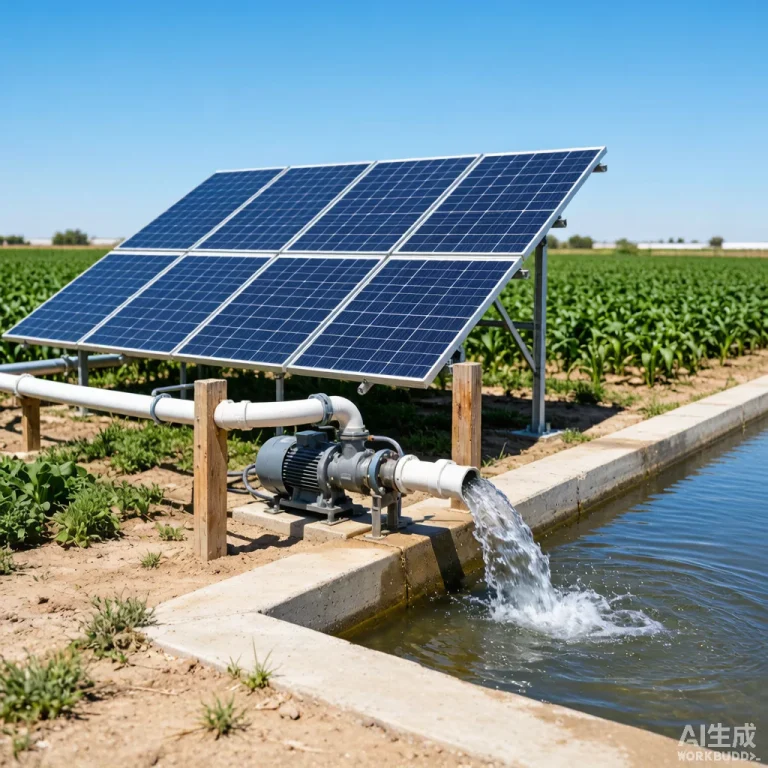
Where the source is a shallow well or a river, a solar surface pump often suits horticulture better than a deep submersible: modest head is all that is needed, and a booster can hold the pressure drip lines require.
Drip and Micro-Irrigation Requirements
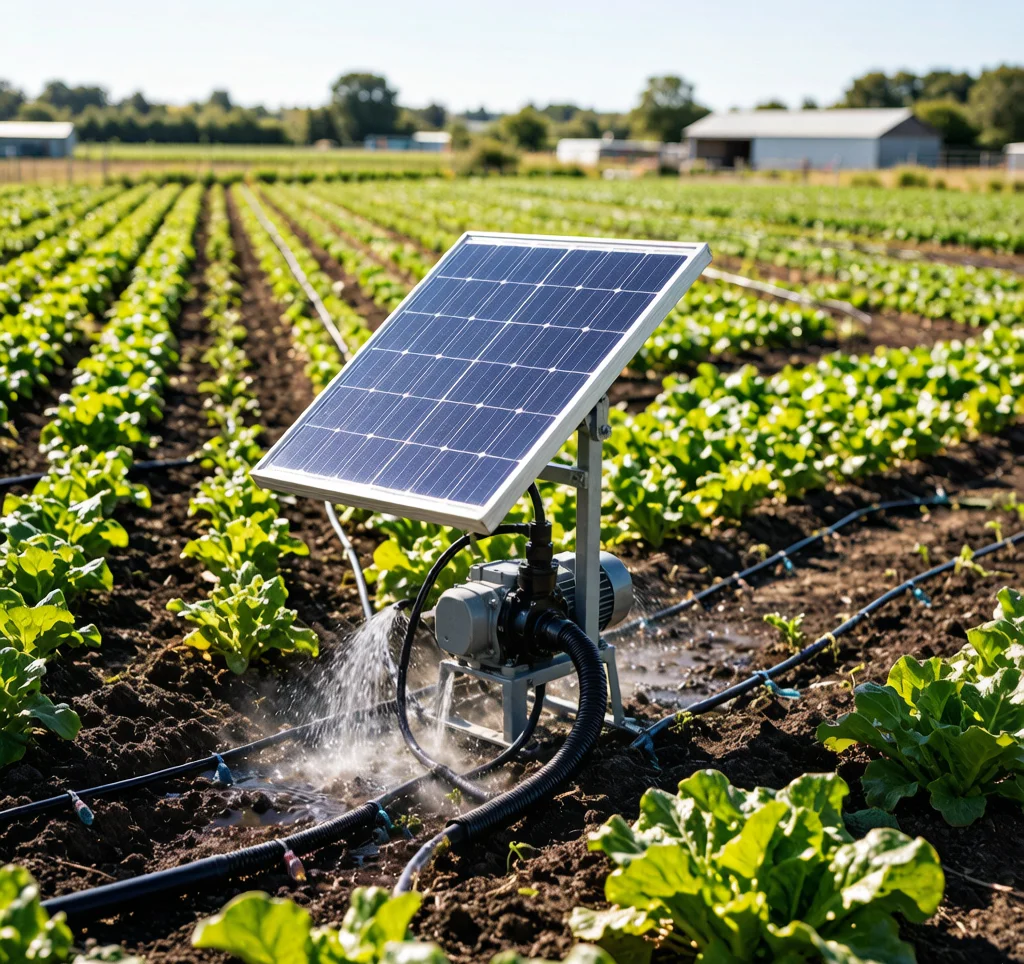
Drip is the most water-efficient option and the most demanding on the pump. Key points:
- Size for the number of zones irrigated at once, not the whole plot—you rarely run all lines together.
- Add a sand or disc filter plus a screen filter to protect fine emitters.
- Fit a pressure-compensating emitter layout so slope does not starve the top of the row.
- Consider a small buffer tank so the pump can run at its efficient point while drip lines draw steady flow.
- Schedule irrigation for morning, when solar output is rising and evaporation is lowest.
KINBO packages surface pumps with the filtration and pressure accessories drip systems need, so the grower is not sourcing fittings separately.
Storage and Daily Scheduling
A tank decouples the sun from the crop. It lets the pump run at maximum efficiency at midday, then drip lines draw from storage on a steady schedule—including brief cloudy spells. The table shows how storage size scales with the plot.
| Plot Size | Daily Need | Suggested Storage |
|---|---|---|
| 0.5 ha vegetables | 15–25 m³ | 10–15 m³ |
| 1 ha mixed horticulture | 30–50 m³ | 20–30 m³ |
| 2 ha orchard / nursery | 60–100 m³ | 40–60 m³ |
Note: volumes assume warm-climate vegetable water demand; adjust for crop, climate and soil. Verify with local data before specifying.
Frequently Asked Questions
Can a solar pump run a drip irrigation system directly?
It can, but pressure varies with the sun; most growers use a small buffer tank or a pressure-stabilized controller for even emitter flow.
What pressure does drip irrigation need?
Typically 1–2 bar at the emitters, plus losses in filters and pipework; size the pump for the worst-case zone running alone.
Is a surface or submersible pump better for a market garden?
If the water level is shallow, a surface pump is usually simpler and cheaper; for a deep borehole, use a submersible with a pressure set.
How much storage should I add?
Roughly half to one day’s irrigation demand, which smooths cloudy afternoons and lets the pump run at its efficient point.
For B2B buyers specifying solar pumping for market garden and horticulture irrigation, contact KINBO for competitive FOB pricing and drip-ready system design.